The google self driving car project, now known as Waymo, began in 2009 as a moonshot within Google X. Over a decade later, it has become the most visible autonomous vehicle effort on U.S. roads, but the gap between a compelling demo and a profitable business remains wide. The technology has matured from a prototype that needed constant human oversight to a fleet that operates without a safety driver in parts of Phoenix and San Francisco. Yet the question for anyone following this space is no longer whether the google self driving car project can work—it's whether it can scale affordably and sustainably.
The Technical Journey
Waymo's hardware story is a study in iterative cost reduction. Early vehicles used a roof-mounted Velodyne HDL-64E LiDAR that cost around $75,000 per unit. The google self driving car project later developed its own in-house LiDAR, bringing the per-unit cost below $10,000—a dramatic drop, but still far from the sub-$1,000 target needed for mass deployment. The sensor suite now includes three types of LiDAR (short, medium, and long range), cameras with 360-degree visibility, and radar. Each vehicle carries roughly $100,000 to $200,000 in sensors and computing hardware, according to industry estimates. That's not a consumer car; it's a capital investment.
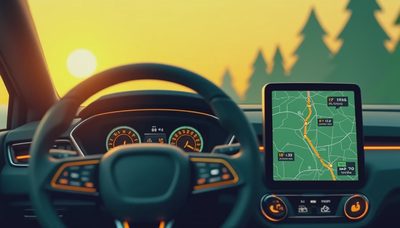
Software is where the google self driving car project has invested the most. The driving stack relies on high-definition maps built from millions of miles of real-world driving and tens of billions of simulated miles. The system uses a combination of rule-based planning and machine-learned behavior, but handling edge cases—construction zones, emergency vehicles, erratic human drivers—remains the hardest problem. Waymo's disengagement data, required by California's DMV, shows progress, but the frequency of interventions in complex urban environments still raises questions about safety case readiness.
The Business Model
The google self driving car project transitioned from research to commercial service with Waymo One, launched in Phoenix in 2018. Today, Waymo operates fare-paying robotaxis in metro Phoenix and San Francisco, and has applied for permits to expand to Los Angeles and Austin. But the unit economics are brutal. Each vehicle must generate enough revenue per mile to cover sensor depreciation, maintenance, charging, remote monitoring, and the cost of mapping new geographies. Waymo uses a purpose-built electric vehicle, the Jaguar I-PACE, which adds complexity around range and charging infrastructure.
Analysts estimate that Waymo's cost per mile is still well above the threshold to compete with ride-hailing or personal car ownership. The google self driving car project's parent company, Alphabet, does not break out Waymo's financials, but external reports suggest annual losses in the hundreds of millions, if not more. Meanwhile, competitors like Cruise and Zoox are burning through cash, and Tesla promises—but has not delivered—a different approach based on vision-only systems. The hardware story and the margin story are not the same story. Waymo has the tech lead, but that lead matters only if it translates into a cost structure that scales.
What's Next: Scaling and Cost Reduction
Waymo's path to profitability rests on two things: dramatically reducing hardware costs and validating that the software can handle new cities with minimal re-engineering. The sixth-generation sensor suite, unveiled in 2024, aims to halve the cost of the sensor stack. But even with that, the per-vehicle cost likely remains above $50,000. To make robotaxis viable, the google self driving car project needs to reach a cost per mile below $1.50, compared to an estimated $2.50+ today, according to industry modeling.
Expansion into new geographies brings its own hurdles. Each city requires detailed mapping and testing—tens of thousands of miles of validation. Waymo's approach of high-definition maps contrasts with Tesla's philosophy of relying on neural networks to handle unfamiliar areas. The google self driving car project claims that its more conservative strategy reduces safety risk, but it also slows geographic scaling. The real question is whether this approach can achieve the density of operations needed for self-sustaining economics.
Key Challenges on the Road to Profitability
Even with technical progress, the google self driving car project faces several hurdles that could delay widespread adoption. Here are the most critical:
- **Regulatory approval**: Each new city requires permits and public trust. Waymo has faced delays in California and must prove safety to regulators.
- **Public perception**: Incidents involving autonomous vehicles, even when minor, erode consumer confidence. Waymo must maintain a pristine safety record.
- **Competition**: Cruise, Zoox, and Tesla are all vying for market share. Waymo's lead in miles driven is shrinking.
- **Infrastructure costs**: Dedicated charging stations, maintenance depots, and 24/7 remote monitoring centers add fixed costs that don't scale linearly.
Addressing these challenges will determine whether the project can transition from a well-funded experiment to a self-sustaining business.
Conclusion: The Hype vs. The Grind
The google self driving car project has accomplished something genuinely difficult: it made a driverless car work in limited areas. But the jump from a successful pilot to a widely available service is arguably a harder problem. Good demo, harder business. The technology might be ready, but the business model is not yet proven. For investors and enthusiasts, the lesson is that the timeline to widespread autonomy is measured in decades, not years. Waymo has the deepest pockets and the longest track record, but even it must eventually show that the math adds up. The next five years will determine whether the google self driving car project becomes a pillar of transportation or a landmark research project that never found its commercial footing.