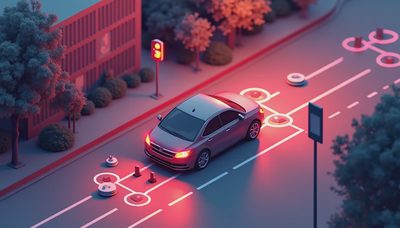
Tesla full self driving (FSD) remains one of the most ambitious and controversial projects in automotive history. After years of promises and iterative beta releases, the system now navigates complex urban environments, handles unprotected left turns, and even responds to traffic lights. But the gap between a driver-assist feature and true autonomy remains wide. This article examines where FSD stands, the real business behind it, and what scaling autonomy actually means.
The Current FSD Beta Release: Progress and Limitations
As of late 2025, Tesla’s FSD (Supervised) is available to a broad set of owners in North America. The system has improved dramatically over the past year, with smoother lane changes, better object detection, and reduced disengagement rates. Yet it still requires constant driver attention. The phrase “full self driving” is misleading — the technology is at Level 2, meaning the driver is always responsible. Real-world videos show impressive maneuvers but also odd failures: phantom braking, misreading traffic signs, or hesitating at familiar intersections.
Tesla full self driving relies on a vision-only approach, eschewing lidar in favor of eight cameras and a neural network trained on billions of miles of real-world data. This decision has lowered hardware costs but also sparked debate about safety and redundancy. Industry skeptics argue that vision alone may never reach Level 4 or 5 reliability, especially in adverse weather. Tesla’s data suggests the system gets better every quarter, but independent testing shows it struggles in edge cases like construction zones or unpainted roads.
The Business Case for Full Self Driving
From Tesla’s perspective, FSD is not just a feature — it’s a revenue stream with huge margins. The company charges $8,000 or a $99/month subscription for access. If even a fraction of the 5+ million Teslas on the road pay for FSD, it represents billions in high-margin software revenue. Tesla also plans to deploy a robotaxi network, where owners can let their cars drive autonomously for profit. The company claims a robotaxi could generate $30,000 annually per vehicle. However, that math only works if regulators approve driverless operations and if the technology reaches high reliability.
The hardware story and the margin story are not the same story. Tesla full self driving hardware (HW3 and HW4) is already installed in every new car, but upgrading the computer for older vehicles costs about $1,500. The real question is whether this scales. Maintaining a fleet of unsupervised robotaxis requires massive investment in remote assistance, mapping, and legal infrastructure — none of which are easy to scale globally.
Regulatory Hurdles and Liability Questions
Regulators remain cautious. The NHTSA has opened multiple investigations into crashes involving FSD, and state-level rules vary widely. In California, autonomous testing permits require detailed reporting. In Arizona, regulations are looser. Tesla full self driving has not yet been approved for deployment without a driver anywhere in the U.S. Even the supervised version faces scrutiny: some argue that marketing the name “Full Self-Driving” is deceptive, and the name itself has become a legal target in consumer lawsuits.
Liability also looms large. If an FSD-equipped car causes an accident, who pays? Tesla’s disclaimers place responsibility on the driver, but courts have not fully tested this. Insurers are already offering discounts for vehicles equipped with advanced driver assistance systems. But tesla full self driving’s reputation for false activations and recalls could push premiums higher. The industry is watching closely.
Competition: Who Else Is in the Race?
Tesla is not alone. Waymo operates a commercial robotaxi service in several cities with full driverless capability, using lidar, radar, and cameras. Cruise (backed by GM) had service in multiple cities before an accident forced it to pause. Both have real driverless miles logged — something Tesla cannot yet claim. Other players like Zoox (Amazon), Motional, and various Chinese companies are also testing. The key difference: Waymo and Cruise started with safety drivers and then went driverless in limited geofenced areas. Tesla is attempting to solve the entire problem at once with a vision-only solution sold as a consumer upgrade.
For investors and automakers, the competition is about which approach yields the best economics. Waymo’s sensor suite costs tens of thousands of dollars per vehicle; Tesla full self driving hardware costs a few thousand. But Waymo’s reliability is higher in its operating domain. The question is whether Tesla can catch up without lidar — and whether the robotaxi business model can scale profitably.
What’s Next for Tesla Full Self Driving?
Tesla continues to push updates every two to four weeks. FSD V13 is expected to roll out with improvements in highway driving, unmarked roads, and better decision-making. CEO Elon Musk has promised unsupervised FSD by the end of 2025 — a deadline he has missed multiple times. Even if unsupervised operation launches in select areas, the business implications are enormous: increased pending regulatory approval, fleet expansion, and public perception shifts.
The real test will be safety data. Tesla currently publishes quarterly safety reports comparing accidents with and without FSD. The data suggests the system improves safety, but critics say Tesla compares to the overall driver population, not a baseline with equivalent driving conditions. For tesla full self driving to reach its potential, the system must convincingly outperform human drivers across all scenarios — not just on highways in good weather.
Conclusion: A Realistic Outlook
Tesla full self driving is a remarkable engineering achievement that still has miles to go. The company’s iterative approach has pushed the industry forward, but the leap from Level 2 to Level 4 remains daunting. For consumers, FSD is an expensive feature that may or may not pay off in the near term. For investors, the value hinges on Tesla’s ability to solve the remaining technical and regulatory challenges. As always with Tesla, promises are aggressive, but execution is what matters. The road to full autonomy is longer than expected — but it’s not standing still.