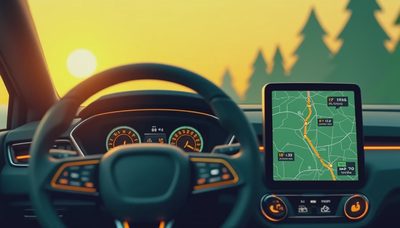
Waymo self driving cars have transitioned from experimental prototypes to a commercial robotaxi service operating in several U.S. cities. While the hype around autonomous vehicles has cooled since the mid-2010s, Waymo has quietly built the most extensive real-world deployment of Level 4 autonomy. But the question that matters for investors and industry watchers is not whether the technology works – it’s whether the unit economics work at scale.
This article breaks down the current state of Waymo self driving cars, the operational footprint, and the cost structure that will determine its long-term viability. For anyone tracking the autonomous vehicle space, Waymo's progress (and its limits) is the closest thing we have to a proof of concept.
How Waymo's Autonomy Stack Works
The Waymo Driver is the company's integrated autonomous driving system. It combines high-resolution lidar, forward-facing and side cameras, radar, and microphones that can detect emergency vehicle sirens. The sensor suite feeds into custom-built computer hardware that runs Waymo's perception, prediction, and planning algorithms. The system relies on high-definition maps that are updated in near real-time. Unlike some competitors that aim for vision-only solutions, Waymo uses a multimodal sensor array to achieve redundancy. This approach increases hardware cost but reduces the risk of perception failure. The real question is whether falling lidar prices – driven by suppliers like Luminar and Valeo – can bring total sensor cost down enough to make Waymo self driving cars profitable on a per-mile basis.

Where Waymo Operates and the Expansion Roadmap
As of early 2025, Waymo self driving cars are actively providing paid robotaxi rides in Phoenix, San Francisco, Los Angeles, and Austin. The company has also begun testing in several other markets, including parts of Texas and the Southeast. Expansion has been deliberate: Waymo applies for permits, maps cities extensively, and introduces service gradually. This cautious rollout contrasts with earlier industry promises of rapid nationwide deployment. Waymo’s parent company, Alphabet, has the patience and capital to support a slow ramp. However, competitors like Cruise (now restructuring) and Zoox are also pushing for wider coverage. The geography of Waymo's current operations – largely sunbelt and mild-weather cities – reflects the tech's current limits in snow and heavy rain. Scaling to more challenging climates will require further sensor and algorithmic improvements.
The Business Case: Costs, Margins, and Path to Profitability
The fundamental tension for Waymo self driving cars is between high upfront cost and low incremental cost. Each vehicle is equipped with sensors and computers that still cost tens of thousands of dollars. Waymo currently uses modified Jaguar I-Pace and future Zeekr-based vehicles. Even if the hardware cost falls to, say, $20,000 per vehicle, the car itself adds another $40,000. That means the robotaxi must generate enough revenue per mile to cover its capital cost plus operational expenses like cleaning, charging, and remote support. Waymo currently charges similar per-mile rates to ride-hailing apps, but with fewer vehicles on the road, utilization is a key driver. The company claims its self driving cars improve safety outcomes, which could lower insurance costs per mile compared to human-driven taxis. But the path to profitability remains years away. The real breakthrough will come when sensor costs drop and the system can operate reliably without teleoperations backup.
How Waymo Self Driving Cars Compare to Other Autonomy Approaches
Waymo’s approach is often contrasted with Tesla's vision-only system and Cruise's similar sensor-heavy strategy. Tesla claims its Full Self-Driving supervised system can eventually achieve full autonomy using cameras alone, but it has not yet deployed a commercial robotaxi service. Waymo self driving cars have demonstrated better safety metrics in their operational domains, but at a much higher hardware cost. Cruise initially aimed for rapid scaling but was forced to pause after safety incidents. Waymo's advantage is its methodical testing and fewer public crashes per mile. However, its high sensor cost and capital intensity make it harder to scale profitably. The winner in autonomy may not be the best technology but the one that solves the cost-per-mile equation first. Waymo appears to be betting on lidar cost reductions and manufacturing scale through partnerships.
What's Next for Waymo and the Industry
Looking ahead, Waymo self driving cars will likely expand into more cities, particularly in the Sun Belt and California. The company is also developing its own hardware in-house, which could lower costs. Regulatory changes, such as the loosening of state-level permit requirements, could accelerate growth. However, the biggest unknown is whether the market for robotaxis is large enough to justify the investments. Waymo faces competition not only from other AV companies but also from ride-hailing giants like Uber and Lyft, which may adopt AV technology when it becomes cheaper. The next 18 months will be critical: if Waymo can demonstrate improving margins in its current cities, the case for widespread deployment strengthens. If not, the industry may shift to more capital-light autonomy models like freight or last-mile delivery.
Waymo self driving cars are the most advanced commercial robotaxi operation in the U.S. today. The technology works, but whether it becomes a transformative business or a niche experiment hinges on cost discipline and scaling speed. For now, they remain the most important case study in the long road to autonomy.