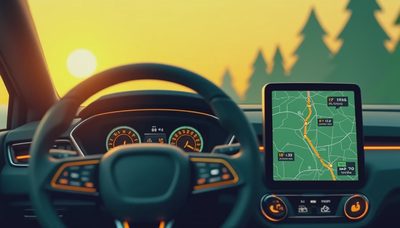
The question "how do self-driving cars work" is one of the most asked in automotive tech today, yet the answer often gets buried in hype. At its core, a self-driving car is a system that perceives its environment, plans a path, and executes driving actions—all without human input. But the real story is in the engineering trade-offs, the sensor economics, and the scaling challenges that separate a good demo from a deployable product.
The Autonomy Stack: Perception, Planning, and Control
Every autonomous vehicle relies on a three-layer software stack. First, **perception** uses sensors to build a real-time model of the world—detecting lane lines, pedestrians, other vehicles, traffic lights, and obstacles. Second, **planning** takes that model and decides what the car should do next: follow the lane, change lanes, stop, or yield. Third, **control** translates those decisions into steering, throttle, and brake commands. This stack is the same whether you're talking about a Level 2 system like Tesla's Autopilot or a Level 4 robotaxi from Waymo. The difference lies in the robustness of each layer—how well they handle edge cases like heavy rain or construction zones.
The Sensors That See the Road
To understand how do self-driving cars work, you need to know the sensor suite. Most systems combine three types: cameras, radar, and lidar. **Cameras** provide high-resolution color images, essential for reading signs and detecting lane markings. **Radar** uses radio waves to measure distance and velocity, working well in rain or fog. **Lidar** uses laser pulses to create a precise 3D point cloud of the surroundings. The debate is whether lidar is necessary for full autonomy. Tesla famously relies on cameras and radar (with ambitions to go vision-only), while Waymo, Cruise, and most robotaxi developers use lidar. The trade-off is cost: lidar has historically been expensive, but solid-state units from companies like Luminar and Hesai have brought prices below $1,000, making it viable for production vehicles.
How the Car Makes Decisions
Once sensors have interpreted the environment, the planning layer takes over. This is where machine learning models—often deep neural networks—predict the future behavior of other road users. For example, the system must anticipate whether a pedestrian at a crosswalk will step into the street or wait. The car then uses a path planner to generate a safe trajectory, optimizing for comfort, efficiency, and safety. This is the hardest part of the autonomy problem, especially in dense urban areas. Companies like Waymo have spent years training their models on millions of miles of real and simulated driving data to handle rare events—everything from a car running a red light to a deer jumping onto the road.
The Business of Autonomy: Who's Ahead?
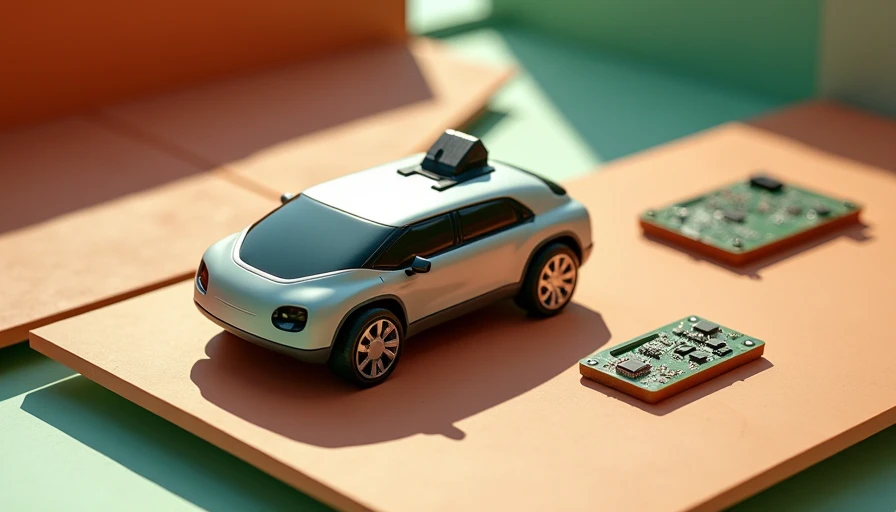
The question "how do self-driving cars work" often leads to "who's actually deploying them?" Waymo operates a commercial robotaxi service in Phoenix and San Francisco, with plans to expand. Cruise (backed by GM) resumed limited operations after a safety incident. Tesla claims its Full Self-Driving (FSD) system will achieve full autonomy, but it's still Level 2—requiring driver supervision. The business consequence is clear: robotaxi operators must achieve safety records far better than human drivers to gain regulatory approval and public trust, all while keeping per-mile costs below ride-hailing or personal car ownership. That means sensor costs, compute power, and operational overhead must shrink dramatically. The hardware story and the margin story are not the same story.
What's Next for Self-Driving Cars?
Looking ahead, the industry is moving toward more scalable architectures. SoCs from Qualcomm, Mobileye, and Nvidia are enabling lower-power, higher-performance compute. Over-the-air software updates allow continuous improvement. And more automakers are adopting a "camera-first plus radar" approach to drive down bill-of-materials costs. But the fundamental question remains: how do self-driving cars work well enough to be trusted without a safety driver? The answer is still being written, one disengagement report at a time.
The Regulatory and Safety Hurdles
For the technology behind how do self-driving cars work to be deployed widely, regulators demand proof of safety. In California, companies must file disengagement reports every year, detailing how often a human driver had to take over. In 2023, Waymo reported an average of 0.2 disengagements per 1,000 miles, while Cruise had much higher numbers before its pause. These metrics matter because they translate to real-world risk. A truly safe autonomous system must outperform human drivers, who cause about 1.02 fatalities per 100 million miles (National Highway Traffic Safety Administration data). Achieving that benchmark requires billions of miles of testing, both real and simulated. The simulation environment allows companies to test rare events—like a child chasing a ball into the street—without physical risk. However, simulation fidelity remains a challenge; models trained in sim often fail in unexpected real-world conditions. This gap between simulation and reality is why no company has yet deployed a Level 5 system. The cost of validation is enormous: Waymo has raised over $10 billion, with a significant portion spent on safety engineering and testing. As lidar costs drop and compute power increases, the path to regulatory approval becomes clearer, but it will take years of consistent safety records to earn full public trust.
*Ready to stay ahead of the curve? Subscribe to TorqueBrief for weekly deep dives into the tech and business of autonomy.*