The promise of fully autonomous vehicles once felt like a perpetual tomorrow. But in 2025, self driving car companies are no longer just chasing demos — they're trying to build real businesses. Waymo runs paid robotaxi services in multiple cities, Cruise is restarting after a safety pause, and Tesla continues to bet everything on vision-only systems. The question isn't whether autonomy works in controlled environments; it's whether any of the current approaches can scale profitably while winning public trust. This article examines where the major self driving car companies stand, what technology splits them, and what it will take for them to move from persistent pilot programs to sustainable operations.
The hardware story and the margin story are not the same story.

The Major Players in Autonomy
The field of self driving car companies has narrowed but not consolidated. Waymo, a subsidiary of Alphabet, leads in operational miles and rider satisfaction, operating in Phoenix, San Francisco, and parts of Los Angeles. Cruise, owned by General Motors, is working to regain regulatory approval after a 2023 accident led to a nationwide halt. Tesla, despite CEO promises, has not yet delivered a Level 4 system; its Full Self-Driving beta remains a driver-assist feature. Zoox, Amazon's autonomous subsidiary, focuses on purpose-built robotaxis with bidirectional driving. Mobileye provides chips and software to automakers like Volkswagen and Ford, taking a more incremental approach through driver-assist systems. Meanwhile, Chinese players like Baidu and Pony.ai are aggressively deploying in Beijing and Shanghai, though regulatory and data barriers keep them out of the US market. The real question is whether any of these companies can build a self-sustaining business before investor patience runs out.
The Technology Divide: Vision vs. Lidar
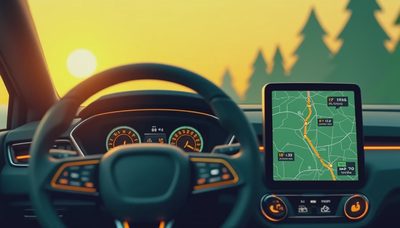
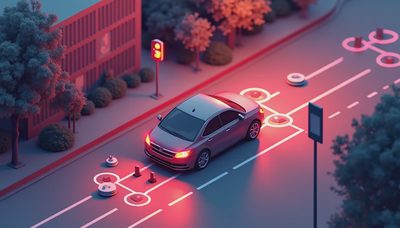
A key split among self driving car companies is sensor strategy. Waymo, Cruise, and Zoox use lidar, radar, and cameras in a redundant sensor stack. This approach is expensive — a single lidar unit can cost thousands — but provides detailed 3D data in all lighting conditions. Tesla, by contrast, relies entirely on cameras and neural networks, arguing that lidar is a crutch that prevents the system from reaching human-level generalization. Each camp has trade-offs. Vision-only systems are cheaper and easier to scale, but struggle with edge cases like shimmering water or unusual road debris. Sensor-rich systems are more robust but expensive to produce, limiting deployment to high-value robotaxi services. For self driving car companies racing to profitability, the sensor choice directly impacts unit economics. Good demo, harder business.
Regulatory Hurdles and Public Trust
Even the best technology means little without permission to operate. Self driving car companies face a patchwork of state and local regulations. California requires permits for deployment, while Texas and Arizona have fewer restrictions. The 2023 Cruise incident, in which a pedestrian was dragged by a robotaxi, triggered a national conversation about safety oversight. The National Highway Traffic Safety Administration has stepped up investigations, and public skepticism remains high. For self driving car companies, earning trust requires transparency around safety data and clear communication of system limitations. The companies that succeed will be those willing to share metrics on disengagement rates and collision reports, not just polished marketing videos.

The Business Case: When Does Autonomy Pay Off?
The economics of autonomy are still uncertain. Waymo charges per ride in Phoenix and San Francisco, but the cost of remote monitoring, vehicle maintenance, and sensor calibration eats into margins. Cruise reported billions in losses before its pause. Tesla's strategy of selling a software upgrade for $8,000 assumes owners will accept liability, which is a different model entirely. For self driving car companies to become profitable, they need to either reduce hardware costs dramatically or achieve high utilization rates in dense urban areas. Some analysts believe autonomous ride-hailing needs to reach $1 per mile to compete with human drivers; current costs are several times that. The hardware story and the margin story are not the same story.
The Road Ahead for Self Driving Car Companies
Looking forward, consolidation is likely. Suppliers like Mobileye and NVIDIA are selling scalable stacks to traditional automakers, which may outpace dedicated robotaxi operators. The big question is when — and if — Level 4 systems become common enough to reshape car ownership. Most self driving car companies now acknowledge that full autonomy is a decade away, not a few years. For now, the focus is on geofenced robotaxi services and commercial delivery. Waymo and Zoox are expanding slowly, while Tesla continues to refine its vision system. The winners will not necessarily be the ones with the flashiest demo, but the ones that can convert passengers into paying riders at scale.
Comparing Business Models of Key Players
The path to profitability differs sharply among leading self driving car companies. Waymo operates a fleet of custom Jaguar I-Paces with full sensor suites, charging per mile in a ride-hailing model. Cruise leaned toward a similar model before its setback. Tesla, in contrast, aims to monetize autonomy through software upgrades on consumer vehicles—a lower-capital approach but one that shifts liability to owners. Zoox is designing a purpose-built vehicle from the ground up, which could optimize passenger space and per-ride costs if mass-produced. Meanwhile, Mobileye sells its driver-assist and autonomous stack to automakers, generating recurring revenue from licensing rather than operations. For investors, the key metric is not just technological capability but unit economics: how much does it cost to operate a vehicle per mile, and how much revenue can it generate? Early data suggests that Waymo’s rides in San Francisco average around $2-3 per mile, while UberX rides are cheaper. To compete, self driving car companies must narrow that gap through lower sensor costs and higher vehicle utilization. A crucial factor is the regulatory framework. Companies operating in permissive states like Arizona and Texas can achieve higher utilization than those in California, where permits and safety requirements are stricter. This geographic variation means that the business case for autonomy can be fundamentally different from city to city, further complicating the path to scale. The race is no longer just about technology—it’s about building a sustainable business model.