What a Real Safety Case for Driverless Cars Should Look Like
The conversation around driverless cars continues to focus heavily on impressive demonstrations and headline autonomy claims. However, for unsupervised robotaxis and advanced hands-off systems to gain broad regulatory and public acceptance, companies must present a robust safety case — one that goes well beyond marketing narratives.
A genuine safety case is not a single document or a collection of cherry-picked statistics. It is a comprehensive argument, backed by evidence, that the system is safe enough for its intended operational design domain (ODD).
Core Elements of a Credible Safety Case
A strong safety case should clearly define the limits of the system and prove it performs reliably within those limits. This includes:
Detailed mapping of the Operational Design Domain — specific geographies, weather conditions, times of day, and road types where the system claims competence.
Comprehensive validation across edge cases and long-tail scenarios that are rare but high-consequence.
Transparent data on system performance, including not just disengagements but also near-misses, intervention types, and recovery mechanisms.
Independent verification and validation processes, ideally involving third-party auditors or regulators.
Clear accountability frameworks for when things go wrong.
Current public reporting often emphasizes miles driven or disengagements per million miles. While these metrics provide some signal, they are insufficient on their own. A system can show excellent statistics in controlled environments while still harboring critical weaknesses in less common conditions.
Technical and Operational Reality
Building a trustworthy safety case requires redundancy and fail-operational architectures. When primary systems encounter problems, there must be reliable fallback mechanisms — whether through additional sensors, remote assistance, or safe degraded operation.
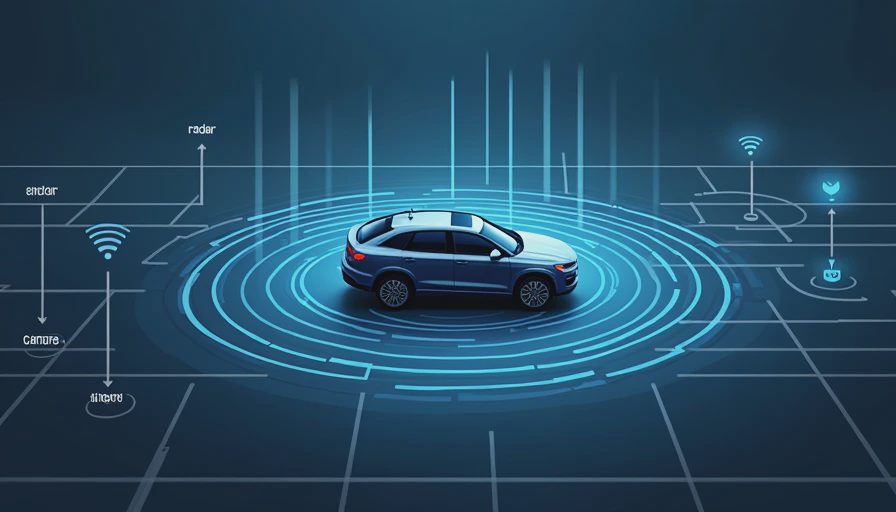
Sensor suites, perception algorithms, planning software, and compute platforms must all be proven together as an integrated system. The interaction between these layers often reveals weaknesses that individual component testing misses.
Real-world performance matters more than simulated results. Weather, construction zones, emergency vehicles, and unpredictable human behavior create complex scenarios that are difficult to fully anticipate in testing environments.
Regulatory and Public Trust Considerations
Regulators are increasingly demanding more than self-reported data. A credible safety case should include external scrutiny and standardized reporting. Public trust also depends on transparency — companies that obscure limitations or overstate capabilities risk backlash when incidents occur.
The gap between demo performance and unsupervised, scalable operations remains significant for most players. Safety cases that acknowledge these gaps and show clear mitigation strategies will carry more weight than those presenting overly optimistic timelines.
What Industry Observers Should Demand
Professionals and informed readers should look for safety arguments that address:
How the system handles rare but critical events
Long-term reliability and degradation of hardware over hundreds of thousands of miles
Cybersecurity defenses against sophisticated attacks
Human factors, including remote operators and public interaction
Continuous improvement processes based on real deployment data
Metrics alone do not equal a safety case. Context, methodology, and independent validation are essential.
The Practical Question
A real safety case for driverless cars must convince not just engineers but also regulators, insurers, and the public that the system is predictably safe within its defined boundaries. This requires rigorous engineering, radical transparency, and humility about remaining unknowns.
The companies that invest in building and communicating thorough safety cases — rather than relying primarily on demonstration videos — are more likely to earn the right to operate at scale. Progress in autonomy should be measured by the strength of these safety arguments, not just by the sophistication of individual technologies.
Auto Stack Report will continue evaluating autonomy developments through this lens: technical capability is necessary, but durable safety and operational readiness are what ultimately determine success.