Waymo’s Expansion Strategy Looks Smart — but the Economics Still Need Proof
Waymo is pushing further into new markets with its autonomous ride-hailing service, steadily broadening its operational footprint beyond its initial strongholds. While the company’s measured approach to new city launches stands out compared to some competitors’ more aggressive timelines, the harder question persists: when will the unit economics support profitable scaling?
The latest expansion moves reflect a strategy focused on controlled growth in locations with favorable regulatory environments and suitable operational conditions rather than chasing rapid nationwide coverage.
Current Expansion Patterns
Waymo has prioritized cities and suburbs where it can leverage existing mapping efforts, maintain high safety performance, and gradually increase fleet utilization. This methodical rollout allows the company to refine its autonomy stack — particularly perception systems and remote assistance protocols — before committing to larger deployments.
By focusing on specific operational design domains (ODDs), Waymo reduces the risk of high-cost interventions that often plague broader, less constrained deployments. This approach appears technically prudent. However, geographic expansion alone does not automatically translate into improved economics.
The Cost-Per-Mile Challenge
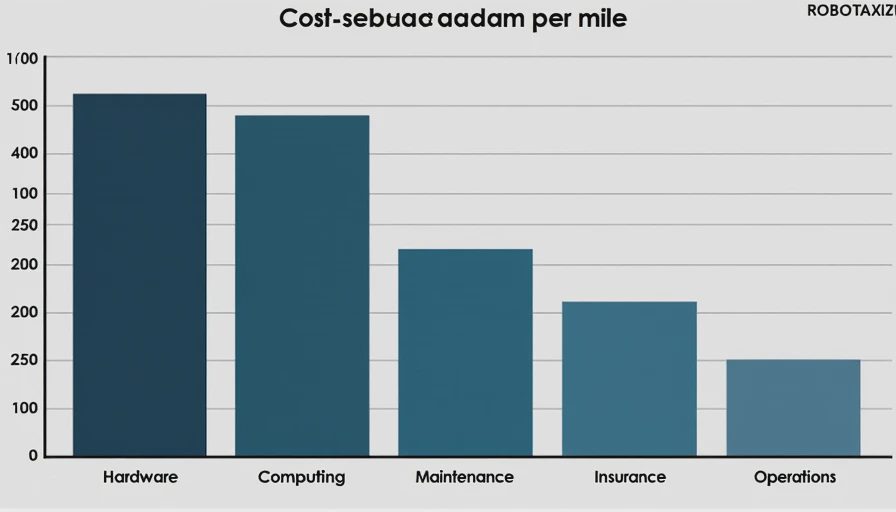
The real test for any robotaxi operator remains cost per mile, including vehicle depreciation, compute power, sensor maintenance, remote supervision, insurance, and energy. Industry observers note that while Waymo has made meaningful progress in reducing disengagements and improving ride smoothness, public data on fully burdened operating costs remains limited.
Key uncertainties include:
How quickly utilization rates rise in newly launched markets
The scaling costs of maintaining a large, diverse sensor and compute suite
Long-term maintenance expenses for vehicles operating tens of thousands of miles annually in autonomous mode
Even with impressive technical demonstrations, these factors determine whether the service can eventually undercut human-driven ride-hailing on price while generating healthy margins.
Strategic Advantages in the Autonomy Stack
Waymo’s vertical integration — owning much of its autonomy software, sensor suite, and mapping technology — gives it significant control over the stack. This contrasts with competitors that rely more heavily on third-party suppliers for core perception or planning components.
This control potentially allows faster iteration and better optimization across hardware and software. It also creates high barriers for new entrants. Yet vertical integration carries its own capital intensity, which must eventually be offset by scale.
The company has also benefited from partnerships with automakers for vehicle supply, helping spread some hardware risks. Still, the margin story and the hardware story are not the same. Heavy reliance on advanced sensors such as LiDAR adds capability in challenging conditions but introduces cost and complexity that pure camera-based approaches seek to avoid.
What This Means for the Industry
Waymo’s expansion reinforces a broader truth in the autonomy sector: success will likely favor operators who solve the full problem — technical reliability, regulatory acceptance, and economic viability — rather than those who lead only in publicity or demo capability.
For traditional automakers and suppliers watching closely, Waymo’s progress raises important strategic questions about their own autonomy timelines and partnership strategies. If robotaxi economics eventually improve, pressure will increase on companies still primarily focused on Level 2+ advanced driver assistance systems for consumer vehicles.
Investors, meanwhile, continue to weigh the capital required for expansion against the timeline to positive contribution margins. Optimistic projections exist, but real-world deployment data has historically moved more slowly than early forecasts suggested.
Risks and Open Questions
The primary risk remains execution at scale. New markets may present unexpected edge cases — different weather patterns, construction norms, or driver behaviors — that increase intervention rates and operating costs. Regulatory shifts in key jurisdictions could also alter expansion economics.
It is not yet clear how quickly Waymo (or any operator) can drive down costs while maintaining the safety and service levels necessary for broad consumer adoption and regulatory confidence.
The Bottom Line
Waymo’s expansion strategy demonstrates discipline and a focus on solvable problems first. This is a smart approach in a field littered with overpromises. However, the ultimate measure of success will not be the number of cities served, but sustainable, profitable operations at scale.
We will continue tracking these developments through the lens of deployment realities rather than announcement volume. The technical progress is noteworthy. The economic proof is still the part that matters most for the long-term trajectory of autonomous mobility.