The autonomous vehicle conversation frequently lumps Tesla, Waymo, and Mobileye together as if they compete head-to-head in the same race. In reality, these three players operate with fundamentally different architectures, target markets, and risk profiles. Understanding these differences is essential for accurate industry assessment.
Distinct Approaches to Autonomy
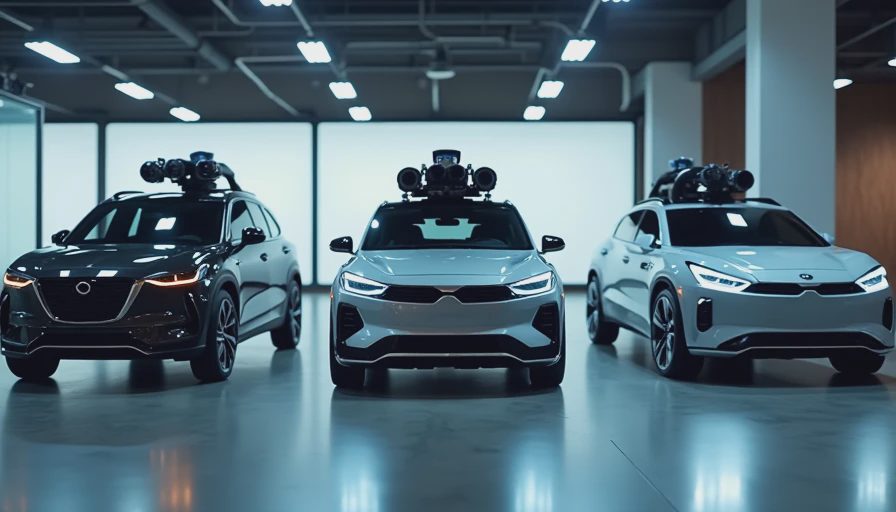
Waymo focuses on full robotaxi deployment with high redundancy sensor suites (LiDAR, radar, cameras) and remote assistance capabilities. It prioritizes safety and operational reliability in defined geofenced areas, aiming for unsupervised commercial ride-hailing services.
Tesla pursues a camera-first, vision-only system relying on neural networks trained on massive fleet data. Its Full Self-Driving (FSD) software targets both consumer-owned vehicles and future robotaxi networks, betting on software scalability and lower per-vehicle hardware costs.
Mobileye (Intel) supplies EyeQ chips and software to multiple automakers, emphasizing scalable advanced driver assistance systems (ADAS) that can gradually evolve toward higher autonomy. It works within traditional automotive supply chains rather than operating its own fleets.
These are not variations on the same theme — they represent different bets on sensor strategy, compute architecture, go-to-market models, and regulatory pathways.
Technical and Economic Trade-offs
Each approach carries unique strengths and constraints:
Waymo’s multi-sensor redundancy improves performance in challenging conditions but increases vehicle cost and maintenance complexity.
Tesla’s vision-only strategy reduces hardware costs and leverages fleet-scale data collection but faces criticism regarding edge-case handling without LiDAR.
Mobileye’s supplier model enables broader adoption across brands but depends on automaker execution and may move more slowly toward full unsupervised autonomy.
The Cost Curve Implications
A robotaxi-focused operator like Waymo must achieve extremely low cost-per-mile to succeed. A consumer ADAS supplier like Mobileye wins through volume and licensing. Tesla sits in the middle, attempting to monetize software on millions of consumer vehicles while building toward shared autonomy.
Why Lazy Comparisons Mislead
Headlines often declare winners based on single metrics — disengagements, miles driven, or demo videos. These ignore the underlying operational design domains (ODDs), regulatory strategies, and business models. A system optimized for highway driving in clear weather faces different challenges than one designed for urban streets with pedestrians and cyclists.
Investors particularly benefit from separating these strategies. Capital intensity, revenue timelines, and margin potential differ dramatically between a vertically integrated robotaxi operator, a consumer software company, and a Tier 1 technology supplier.
What to Watch in Coming Months
Meaningful signals include:
Waymo’s ability to expand profitable operations beyond current markets
Tesla’s progress moving FSD from supervised to unsupervised in key jurisdictions
Mobileye’s adoption rate of next-generation EyeQ chips in production vehicles
Progress should be measured against each company’s stated goals rather than a generic “autonomy race” narrative.
The Practical Question
Tesla, Waymo, and Mobileye are not directly interchangeable competitors. They are attacking different parts of the autonomy stack with different constraints and payoff structures. The companies that best align technical execution with sustainable economics in their chosen segment will create the most value.
Direct comparisons make for simple headlines but poor analysis. Understanding the specific problems each is trying to solve provides clearer insight into their prospects and the broader industry trajectory.