Every few years, a new wave of hype rolls in claiming the self driving car is just around the corner. But for anyone watching the autonomy stack closely — sensors, compute, software validation — the gap between a good demo and a viable business remains enormous. Waymo, Cruise, Tesla, and dozens of startups have poured billions into making vehicles that can handle specific geofenced areas, yet a truly ubiquitous self driving car — one that can go anywhere, anytime, in any weather — still feels distant. The question isn't if the technology works in controlled conditions. It's whether the economics and regulatory framework can ever support mass deployment.
The Tech Reality: Perception, Prediction, and the Long Tail
The core problem is that driving is an edge-case problem. Even the best sensor suites — lidar, radar, cameras — struggle with heavy rain, snow, or unexpected road debris. Tesla's vision-only approach, for instance, has made admirable progress but still relies heavily on driver supervision. The long tail of rare events — a mattress falling from a truck, a police officer signaling through an intersection — requires a level of semantic understanding that today's neural networks don't consistently deliver. A self driving car needs to handle millions of such edge cases before it can be truly unsupervised. Waymo's approach, using high-definition maps and expensive lidar arrays, works in parts of Phoenix and San Francisco but doesn't scale cheaply.
The Cost Curve: Why Hardware Still Hurts
For a self driving car to reach the mass market, the sensor and compute stack must drop dramatically in cost. Today, a Waymo vehicle's lidar and computing system alone is estimated to cost tens of thousands of dollars. That's fine for a robotaxi fleet that amortizes the expense over hundreds of thousands of miles, but it kills any hope of a self driving car for private ownership at a reasonable price. Tesla claims its camera-only approach will be far cheaper, but the trade-off may be slower progress on reliability. The hardware story and the margin story are not the same story. Lidar companies like Luminar and Ouster are driving costs down, but they're still far from the sub-$1,000 target needed for broad adoption.
Regulations Are the Bottleneck
The most underappreciated barrier for the self driving car is the patchwork of state and federal regulations. NHTSA's framework for autonomous vehicle exemptions is slow, and no national standard exists for testing or deployment. Each state can set its own rules, creating a compliance nightmare for companies that want to scale nationally. California's strict permitting process, for example, has slowed Cruise and Waymo even as they logged millions of autonomous miles. Meanwhile, safety concerns — like the high-profile incidents involving Cruise's robotaxis in 2023 — have made regulators more cautious, not less. A self driving car doesn't just have to be safer than the average driver; it has to be demonstrably safer in a way that satisfies public perception. That bar is higher than most engineers appreciate.
What's Next: Robotaxis First, Private Cars Later
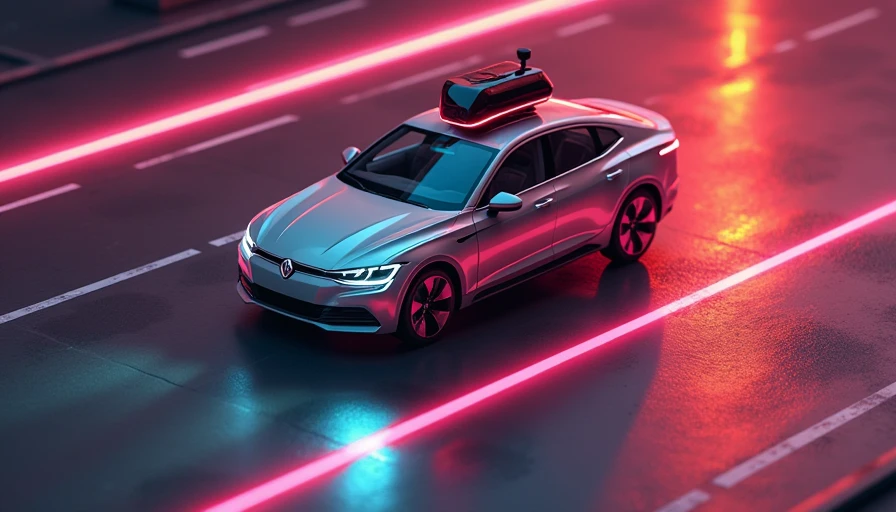
The most realistic path for the self driving car is a phased rollout through robotaxi fleets in limited geographies. Waymo's expansion to Los Angeles and its partnership with Uber in Austin suggest this model has legs. The economics of a fleet vehicle can absorb the high sensor costs, and the fixed operating area makes validation easier. But even here, profitability is elusive. Cruise lost more than $2 billion in 2023, and Waymo's revenue is tiny relative to its parent Alphabet's investment. The dream of a self driving car you can buy and pilot hands-free on any road is likely a decade away, if it happens at all. For now, the technology works in a box — a small, expensive, geographically constrained box. The real question is whether this scales beyond those boxes.
The Insurance Shockwave: Who Pays When the Car Drives?
When a self driving car is at fault, liability shifts from driver to manufacturer or software provider. This changes auto insurance fundamentally. In robotaxi fleets, commercial policies cover the vehicle, and personal auto insurance may become obsolete for those who don't drive manually. Some insurers like Progressive and Geico are already testing pay-per-mile or usage-based policies tailored to vehicles with autonomous features. Some are already differentiating between manual and autonomous driving in their pricing models, while others are holding off until the technology matures. But the transition will be messy: state regulations vary on liability, and courts need to decide how to assign fault in crashes involving autonomous mode. For example, in a 2022 incident involving a Tesla on Autopilot, the question of whether the driver or the auto manufacturer bears responsibility led to a lengthy legal battle. As more self driving car miles accumulate, the insurance industry is pushing for clear federal guidelines to avoid patchwork outcomes. The shift could also lead to new product categories, such as software liability insurance for AI companies. In the meantime, owners of vehicles with partial autonomy should review their policies carefully. Not all insurance companies handle advanced driver-assistance systems the same way. Some offer discounts for safety features, while others exclude coverage for damage caused by autonomous mode. This uncertainty adds another layer of risk to the economic case for widespread adoption. For now, the self driving car remains an insurance riddle as much as an engineering one.
Conclusion: Don't Believe the Hype, But Don't Ignore It Either
A self driving car that works flawlessly everywhere is not imminent. But the incremental progress in perception, simulation, and cost reduction is real. Suppliers and automakers should plan for a future where autonomy is a feature you pay for by the mile, not a one-time purchase. Investors should be skeptical of any company that promises full autonomy by next year without showing a path to unit economics. The business of the self driving car is still being written, and the most important writers right now are regulators and supply chain managers — not demo videos.