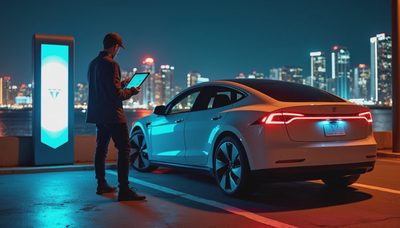
If you follow the auto industry, you hear the phrase "automotive systems technology" almost daily. It's the umbrella term for everything from adaptive cruise control to battery management to the OS running your dashboard. But beneath the press releases, the reality is more complicated. Not every system delivers on its promise, and the gap between a good demo and a production-ready feature is still wide.
For anyone buying a car or investing in the space, understanding which automotive systems technology actually works—and which is still vaporware—matters. Let's walk through the major subsystems, what they cost, and where the industry stands today.
The Autonomy Stack: Where Reality Meets Hype
Every automaker now talks about Level 2+ or Level 3 autonomy. The hardware story—cameras, radar, lidar—has been told a hundred times. The real question is whether the software stack can generalize beyond the demo routes. Tesla's FSD (Supervised) remains a work in progress; Mobileye's SuperVision is shipping in production cars but only in limited markets. Meanwhile, companies like Waymo and Cruise operate robotaxis in geofenced zones with massive sensor suites that don't scale to $40,000 vehicles.
What we're seeing is a split: high-volume ADAS (adaptive cruise, lane keep) works well and is cheap. Full self-driving remains a lab experiment for the mass market. The implication for buyers: pay for good ADAS, ignore the autonomy claims until they're proven in real-world insurance data.
Car Software: The New Competitive Battleground
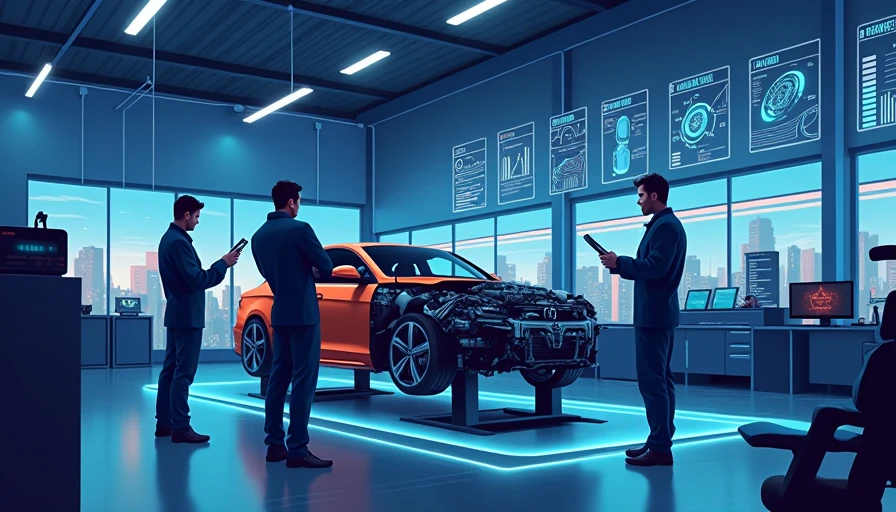
The software-defined vehicle is more than a buzzword. Modern cars run 100+ million lines of code, and the OS—whether it's Android Automotive, QNX, or a proprietary system—determines a huge part of the user experience. Yet many OEMs still ship buggy infotainment systems that lag, crash, or require dealer visits for updates.
Companies that treat automotive systems technology as a core competency, like Tesla, Rivian, and Lucid (plus newcomers like Xiaomi), push OTA updates that improve features over time. Legacy OEMs are catching up—Ford's SYNC 4A and Hyundai's ccOS show real progress. The margin story here is crucial: software subscriptions could add recurring revenue, but only if the systems are reliable enough that customers don't hate them. Good demo, harder business.
Chips & Supply Chain: The Bottleneck That Won't Let Go
The semiconductor shortage from 2020–2023 exposed how fragile the automotive supply chain is. Automotive systems technology relies on specialized chips—MCUs, SoCs, power management ICs—that can't be swapped overnight. Even now, lead times for certain 28nm chips used in ECUs stretch 20+ weeks.
Automakers are reshoring and signing direct deals with foundries like TSMC and GlobalFoundries, but the shift takes years. The hardware story and the margin story are not the same story: building a chip factory costs $10+ billion, and yields take time to ramp. For the next three years, expect supply constraints on high-end systems like lidar processors and infotainment SoCs. This affects which features make it into volume models.
Charging & Battery Systems: Infrastructure Gaps
EV adoption depends on charging systems that are reliable and fast. Automotive systems technology here includes battery management (BMS), thermal control, and the communication protocols between car and charger. Today, the real problem isn't battery chemistry—it's that public chargers fail 20-30% of the time, according to consumer reports.
Tesla's Supercharger network remains the gold standard because of its integrated systems approach: the car talks to the charger, preconditions the battery, and handles payments seamlessly. Other networks are improving with Plug & Charge (ISO 15118), but fragmented payment apps and broken hardware still dominate the experience. The cost curve is improving—battery pack prices dropped below $100/kWh in early 2025—but the infrastructure gap means range anxiety isn't gone, just shifted to charger availability.

The Cost Curve: When Does It Pay Off?
New automotive systems technology adds upfront cost. An advanced ADAS pack can run $2,000–$5,000 on a new car. Premium infotainment adds another $1,000. EV powertrain systems cost more than ICE equivalents, though parity is expected around 2026–2027. For owners, the question is whether these systems reduce total cost of ownership through fuel savings, lower maintenance, or insurance discounts.
Some insurers now offer lower rates for cars with proven crash-avoidance systems. But the discount is modest—typically 5-10%—and varies by state. The key takeaway: if you're buying a car, choose systems with real-world safety data, not marketing claims. The hardware story may be impressive, but the payoff only comes when the tech actually works in all conditions.
What to Watch in 2025
The next year will test whether automotive systems technology can deliver on its promises. Look for three signals: first, more production-level Level 3 systems in high-end cars (Mercedes already offers Drive Pilot). Second, wider adoption of Android Automotive as the standard in-car OS—GM, Honda, and Ford are all in. Third, the first serious V2G (vehicle-to-grid) deployments that let EVs send power back to the grid.
These are not guaranteed. The industry has a long history of overpromising. But if the trends hold, 2025 will be the year automotive systems technology moves from demos to daily reality. Keep your expectations tempered, your eye on the data, and your wallet ready—the cost curve is coming down, but not as fast as the hype.
For more on how specific systems affect insurance and ownership costs, check our in-depth guides.