Every year, automakers promise a revolution. In 2025, the latest wave of **new automotive technology** ranges from Level 4 autonomous trucks to solid-state batteries that still haven’t hit production. The real question is whether any of this scales beyond a press release. This article cuts through the noise to examine the technologies that matter for the industry’s bottom line—and those that remain more theater than breakthrough.
Consider the autonomous driving stack. Waymo and Cruise operate limited robotaxi services in a handful of cities, but the unit economics are brutal. A single LIDAR unit that once cost $75,000 now runs under $1,000, yet the overall system cost remains prohibitive for mass adoption. The hardware story and the margin story are not the same story. For every demo of a driverless car navigating a busy street, there are thousands of edge cases that cost billions to solve. This is why most OEMs have pivoted to driver-assist features (Level 2+) rather than full autonomy. The capital required to deploy a geofenced robotaxi fleet at scale is staggering, and the revenue per mile hasn’t proven itself. Good demo, harder business.
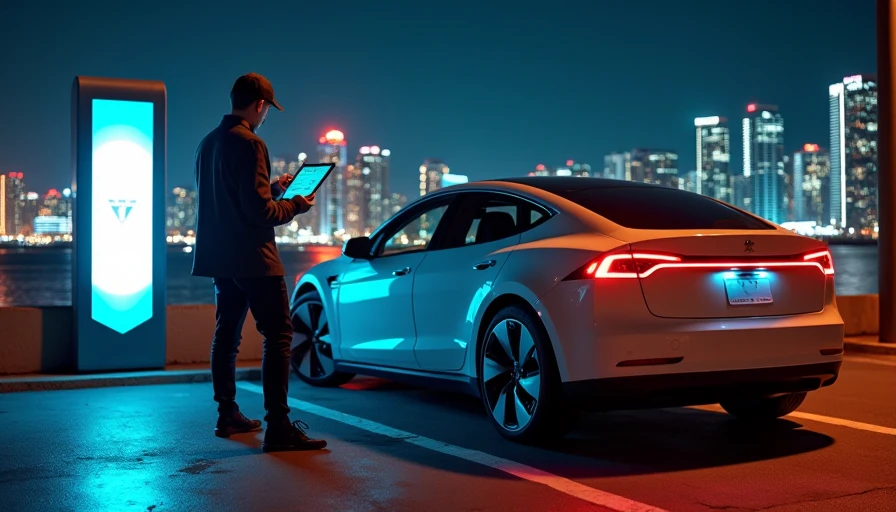
The Real Cost Curve in Autonomy and EVs
The promise of electric vehicles was always about lower operating costs. **New automotive technology** has driven battery pack prices down from $1,200/kWh in 2010 to around $130/kWh in 2025—but that still leaves a $5,000–$10,000 premium over an equivalent internal combustion vehicle. The cost curve is real, but it’s flattening. Raw material prices for lithium, nickel, and cobalt remain volatile, and the push to LFP (lithium iron phosphate) chemistry is a pragmatic response to margin pressure. For investors, the question isn’t whether EVs will dominate eventually, but whether the transition timeline makes sense given charging infrastructure gaps. The hardware story is improving; the margin story is still being written.
Autonomous trucking is a different bet. Companies like TuSimple and Plus have demonstrated Level 4 highway autonomy, but the operating domain is limited to good weather and well-marked routes. The business case hinges on removing the driver from the cab—saving $70,000–$100,000 per year in labor. But regulatory approval for driverless trucks remains elusive, and the technology isn’t reliable enough for unsupervised operation across all conditions. The real question is whether this scales. So far, the answer is “not yet.”
Software-Defined Vehicles: Hardware vs. Margin
The industry’s obsession with “software-defined vehicles” is both real and overblown. Every major automaker now talks about over-the-air updates, app stores, and subscription features. The underlying **new automotive technology**—centralized zonal architectures with powerful SoCs from Qualcomm, NVIDIA, and Mobileye—enables a fundamentally different vehicle lifecycle. A car’s software can now be upgraded for years, potentially generating recurring revenue. But the execution gap is wide. Tesla is the clear leader, with its vertical stack and ability to push updates that actually improve functionality. Legacy OEMs are still struggling with legacy software silos and supplier dependencies. The hardware story is compelling; the margin story depends on whether customers actually pay for subscriptions. Early data suggests most drivers are reluctant to pay for features like heated seats or adaptive cruise control after purchase. The real test will come when automakers stop bundling core features into base trims—a risky move that could alienate buyers.

Charging Infrastructure: Why It’s Still the Bottleneck
Even as EV range approaches 400 miles and charging speeds hit 350 kW, the user experience remains inconsistent. The rollout of NACS (Tesla’s connector) as a de facto standard is a positive step, but the number of reliable fast chargers per vehicle on the road is still low. The Inflation Reduction Act allocated billions for charging, but permitting delays, grid interconnection costs, and equipment reliability issues have slowed deployment. The technology itself—liquid-cooled cables, advanced power electronics—is less the bottleneck than the deployment model. For every fast charger installed, there are dozens that operate below rated power or are down for maintenance. The **new automotive technology** in charging must solve the uptime problem, not just the power rating problem. Until every high-speed stall delivers its promised speed every time, the charging experience will remain a barrier to mass adoption.
Supply Chain Lessons from the Semiconductor Shortage
The automotive industry learned a hard lesson during the 2020–2023 chip shortage: just-in-time inventory doesn’t work for complex silicon. Most OEMs are now reshoring some chip production and diversifying suppliers. **New automotive technology** in this area includes chiplet architectures and domain controllers that reduce the number of discrete microcontrollers per vehicle. But the transition is slow. A typical car still contains over 1,000 semiconductor components. The shift to a more centralized architecture will take years to fully implement. For now, the supply chain is more resilient than it was, but not yet robust. The real question: will the next disruption—be it geopolitical or pandemic-induced—again cripple production? The industry is betting on diversification, but the margin story for in-house chip design vs. buying from suppliers remains open.
Where to Watch Next
The most impactful **new automotive technology** over the next five years may not be in the vehicle at all. It will be in manufacturing: gigacasting, structural battery packs, and automated assembly lines that reduce the number of parts and labor hours. Tesla’s underbody casting process, now being adopted by Toyota and Volvo, cuts parts count from hundreds to a few. This is the kind of operational innovation that actually improves margins. Similarly, advances in battery recycling could lower raw material costs and reduce environmental liability. The technology bets that will win are those that lower total system cost—not just feature lists. Keep an eye on companies that solve for scale, not just speed.
In summary, the landscape of **new automotive technology** in 2025 is a story of incremental progress masked by big promises. Autonomy is advancing slowly, EVs are getting cheaper but not cheap enough, software-defined cars are real but unproven as a revenue stream, and charging infrastructure remains a weak link. For investors and industry professionals, the smart money is on technologies that reduce manufacturing complexity and improve supply chain resilience—not on the flashiest demo. The real test of any technology is whether it scales, and so far, the industry is still learning that lesson the hard way.
---
*TorqueBrief provides independent analysis of automotive technology, autonomy, and supply chains. Subscribe to our newsletter for more depth on the business consequences behind the headlines.*