The Problem With Measuring Self-Driving Progress by Demo Videos
Autonomous vehicle companies frequently release polished demo videos showing smooth rides through complex environments. These clips generate significant media attention and excitement. However, relying on them as a primary measure of progress creates a distorted view of where the industry actually stands.
Demo videos are carefully staged, heavily scripted, and often conducted under ideal conditions. They rarely reflect the full spectrum of challenges faced in unsupervised, commercial operations.
Why Demo Videos Mislead
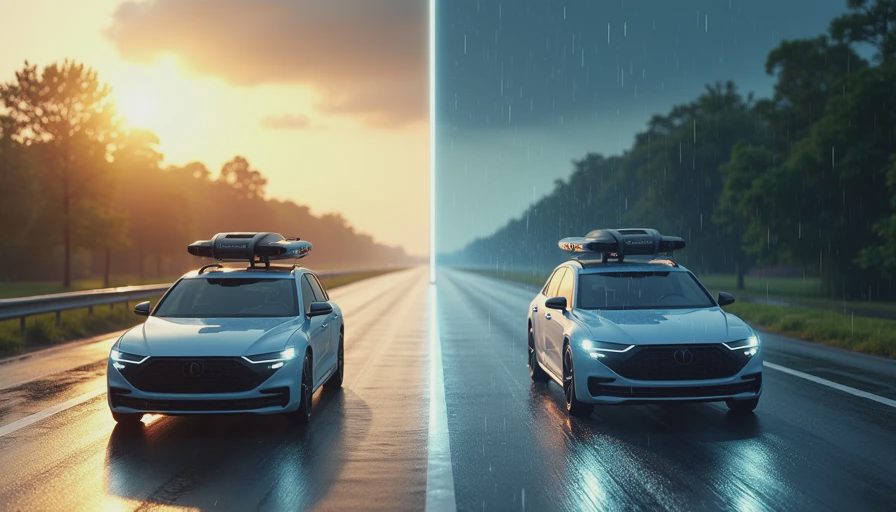
A controlled demonstration can showcase impressive perception and planning capabilities. Yet real-world autonomy must handle unpredictable variables: construction zones, erratic human drivers, poor weather, sensor degradation, and edge cases that occur infrequently but carry high risk.
Videos typically omit key context:
Whether the system was operating fully unsupervised
The amount of remote human intervention required
The specific operational design domain (ODD) limitations
How the system would handle rare but critical failures
This creates a gap between perceived progress and deployable progress.
The Scalability Gap
What works in a curated video often does not translate easily to millions of miles of diverse driving conditions. A system that performs well on sunny days in familiar areas may struggle with snow-covered roads, heavy rain, or new construction. Scaling from successful demos to reliable robotaxi service requires solving an enormous number of long-tail scenarios.
The cost-per-mile equation also changes dramatically when moving beyond cherry-picked routes. Safety drivers, remote operators, and fallback systems add significant operational expense that rarely appears in highlight reels.
Better Ways to Measure Progress
Serious observers should prioritize different signals:
Performance data from unsupervised operations in defined domains
Transparent safety case documentation and third-party validation
Real utilization rates and cost metrics from commercial deployments
Consistency of performance across varied conditions and over long periods
Regulatory approvals for expanded unsupervised service
These indicators provide a more grounded assessment than individual demo clips.
Industry Implications
Over-reliance on demo videos distorts capital allocation, public expectations, and regulatory discussions. Companies that excel at producing compelling footage may not be the same ones that deliver safe, profitable operations at scale. This misalignment can waste resources and delay genuine breakthroughs.
Investors and industry professionals benefit from looking past the highlights to the harder operational realities. The companies making the most meaningful progress are often those quietly solving the mundane but critical problems of reliability, maintainability, and economic viability.
The Practical Question
Demo videos will always be part of technology storytelling. However, they should be treated as marketing material rather than proof of deployment readiness. The real progress in self-driving technology will be measured by mundane operational metrics — uptime, cost efficiency, and safety performance across thousands of daily unsupervised trips — not by the smoothness of curated clips.
Distinguishing between impressive demonstrations and durable product progress remains one of the most important skills for anyone following the autonomy sector.
Auto Stack Report will continue evaluating self-driving developments based on deployment realities rather than video quality.