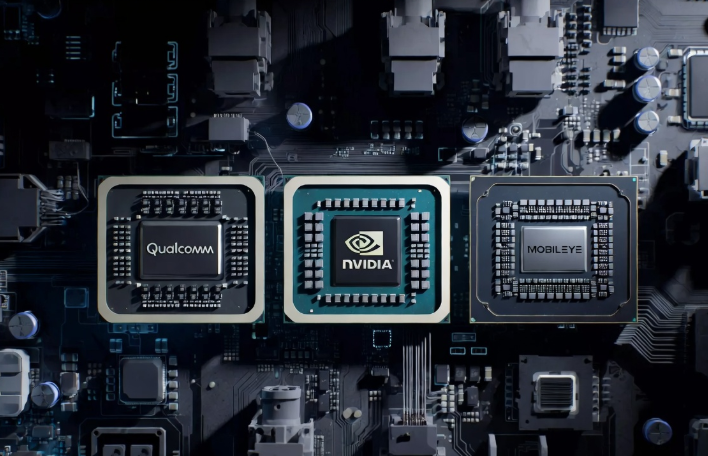
Qualcomm vs. Nvidia vs. Mobileye: Who Actually Owns the Car’s Brain?
The competition to supply the central computing power for next-generation vehicles is intensifying. Qualcomm, Nvidia, and Mobileye have emerged as the three most prominent players in the race to provide the “brain” inside modern cars. Each company approaches the opportunity with distinct technologies, partnerships, and strategies.
Different Strengths and Focus Areas
Nvidia leads with high-performance AI compute platforms, particularly strong in advanced autonomy and centralized architectures. Its DRIVE platform targets demanding autonomous driving workloads and rich digital cockpits, leveraging its powerful software ecosystem.
Qualcomm emphasizes integrated Snapdragon Ride platforms that combine ADAS, infotainment, and connectivity. The company benefits from deep experience in mobile silicon and has built strong relationships with many automakers seeking scalable, cost-effective solutions across vehicle segments.
Mobileye (backed by Intel) focuses on vision-based systems and scalable ADAS solutions. It supplies both hardware and software to a wide range of traditional automakers, often emphasizing gradual progression from driver assistance toward higher autonomy levels.
These are not direct apples-to-apples competitors. They are often chosen for different vehicle tiers, autonomy ambitions, and regional market needs.
The Battle for Control Points
Ownership of the central compute unit matters because it influences software architecture, update capabilities, data access, and long-term platform strategy. Automakers want powerful silicon but are wary of becoming too dependent on any single supplier.
Nvidia offers leading-edge performance but can come with higher costs and stronger software ecosystem lock-in. Qualcomm provides a more balanced, automotive-focused solution with good scalability. Mobileye delivers proven vision technology and broad OEM relationships but may lag in raw compute power for the most advanced use cases.
Key tension points include:
How much control automakers retain over the software stack
Pricing and volume commitments at scale
Ability to support long vehicle lifecycles (10+ years)
Integration with other vehicle systems and sensors
Strategic Implications for Automakers
Carmakers are increasingly pursuing multi-vendor strategies to avoid single points of failure. Some pair Nvidia for flagship autonomy programs with Qualcomm for volume models. Others use Mobileye for mainstream ADAS while developing in-house capabilities.
This diversification adds complexity and cost but improves supply chain resilience and negotiating power. The choice of compute supplier also affects how quickly automakers can deliver new software features and subscription services.
What This Means for the Industry
The winner in the automotive brain battle will not necessarily be the company with the most powerful chip. Success depends on balancing performance, cost, reliability, and partnership flexibility. As vehicles become more software-defined, control over the central compute increasingly determines who captures more of the vehicle’s lifetime value.
Suppliers that can deliver both hardware capability and strong software tools while respecting automaker desires for differentiation will hold the strongest position.
The Practical Question
Qualcomm, Nvidia, and Mobileye are all winning important sockets, but they solve slightly different problems for different parts of the vehicle lineup. No single company is likely to dominate every segment. Automakers that skillfully combine these technologies while maintaining architectural control will have the greatest flexibility as software and autonomy demands continue to evolve.
The real contest is not just about raw performance — it is about who best aligns with automaker priorities around cost, control, and long-term execution.
Auto Stack Report will continue tracking these platform battles with focus on production decisions rather than announcement leadership.