Green technology automotive is a phrase that gets thrown around a lot at auto shows and in press releases. But separating genuine engineering progress from marketing hype is harder than it sounds. For anyone following the space—whether you’re an investor, a supplier, or just a curious driver—the question isn’t whether green tech is coming. It’s which solutions will actually reach the road at scale, and how quickly they’ll reshape the industry’s cost structure.
The automotive sector is under enormous pressure to decarbonize. Regulators in the US, Europe, and China are tightening tailpipe standards. Consumers, especially younger buyers, increasingly factor environmental impact into purchase decisions. At the same time, automakers need to maintain margins on vehicles that are already expensive to engineer. This tension is where green technology automotive finds its real test: can it deliver both environmental gains and business viability?
Let’s look at the key areas where green technology automotive is making tangible progress—and where the gap between a good demo and a harder business remains wide.
The Battery Chemistry Shift: What’s Moving Beyond Lithium-Ion
Lithium-ion batteries have powered the first wave of EVs, but the race is on to find cheaper, denser, and more sustainable chemistries. Lithium iron phosphate (LFP) has already gained ground because it avoids cobalt and nickel, reducing both cost and supply-chain risk. But LFP’s lower energy density means it’s better suited for entry-level EVs or stationary storage.
The next frontier is solid-state batteries. Companies like QuantumScape, Toyota, and Samsung SDI are pursuing designs that replace the liquid electrolyte with a solid material, promising higher energy density, faster charging, and better safety. However, scaling solid-state manufacturing has proven stubbornly difficult. Good demo, harder business—and that’s the story of green technology automotive so far. Realistically, widespread solid-state production is still years away, and even then, cost parity with LFP will take time.
Another emerging option is sodium-ion batteries. Sodium is abundant and cheap, but current cells have lower energy density than lithium-ion. For short-range city cars or budget models in markets like China and India, sodium-ion could be a viable green technology automotive solution. But for the US market, where range anxiety is a major barrier, sodium-ion won’t be a primary player this decade.
Charging Infrastructure: The Real Bottleneck
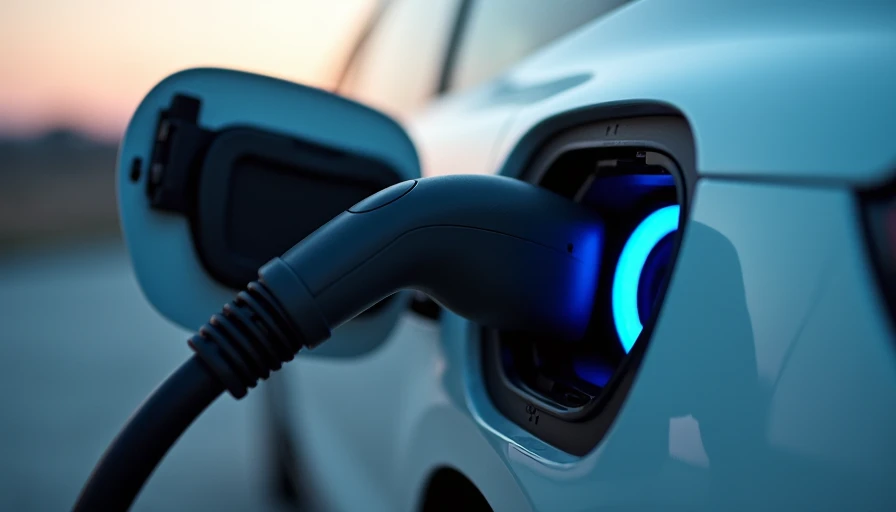
Even the most efficient battery is useless if drivers can’t reliably charge. In the US, public charging remains fragmented—slow Level 2 chargers dominate, and DC fast chargers are often concentrated along major highways rather than in the urban and suburban areas where most people live. The Biden administration’s NEVI program is pouring billions into a national network, but execution has been slow. Many chargers are still out of order, and payment systems vary by network.
Green technology automotive isn’t just about the car; it’s about the grid around it. Automakers are increasingly investing in their own charging networks. Tesla’s Supercharger network remains the gold standard, and now Ford, GM, and others are adopting the NACS plug to access it. But interoperability is still messy. The real question is whether the industry can standardize not just plugs but payment, maintenance, and power output across brands.
On the home-charging side, bidirectional charging (V2G) is gaining attention. It lets an EV act as a home battery during blackouts or sell power back to the grid. Utilities in states like California and Texas are piloting programs. If V2G becomes widespread, it could turn every EV into a grid asset, lowering total ownership costs. That’s the kind of win-win that makes green technology automotive compelling from both an environmental and an economic angle.
Sustainable Materials and Manufacturing
EVs are often called “zero-emission vehicles,” but that label ignores the carbon embedded in their production. Mining lithium, cobalt, and nickel is energy-intensive, and battery manufacturing itself creates a significant footprint. Automakers are now focusing on reducing that upstream impact.
BMW’s i Vision Circular and Volvo’s ambition to be a climate-neutral company by 2040 show how green technology automotive is expanding beyond the powertrain. Recycled aluminum, natural-fiber composites, and synthetic leathers made from plant-based materials are appearing in production vehicles. Ford uses soy-based foam in seat cushions. Mercedes-Benz sources steel from a process that reduces CO2 by up to 60%.
But materials sustainability often conflicts with cost and weight. Natural fibers can be heavier or less durable than synthetics. Recycled metals may have supply constraints. The challenge for green technology automotive is to make these materials cheap enough to deploy across mass-market models, not just luxury trims. So far, only premium automakers have led the way, but economies of scale are starting to bring costs down.

Software-Driven Efficiency: Over-the-Air Updates and Smart Energy Management
Green technology automotive isn’t just hardware—software plays a huge role too. Over-the-air (OTA) updates allow automakers to improve battery management, adjust regenerative braking, and optimize thermal systems long after a car leaves the factory. Tesla has done this for years, and legacy OEMs are catching up.
Smart navigation systems can plan routes to minimize energy use, factoring in elevation, traffic, and weather. Some EVs even pre-condition the battery before arriving at a charger, reducing charging time. These features don’t require new materials or factories—they’re pure software, and they can deliver meaningful efficiency gains at virtually zero marginal cost.
From a business perspective, OTA also creates recurring revenue streams. Subscription services for enhanced battery range, performance upgrades, or driving features are increasingly common. This shift is making green technology automotive more attractive to investors because it turns a one-time sale into an ongoing relationship. The hardware story and the margin story are not the same story—and software is where the margin story gets interesting.
Supply Chain Sustainability: Where the Real Leverage Is
An often-overlooked aspect of green technology automotive is the supply chain. Battery production today is heavily concentrated in China, which controls most of the refining capacity for lithium, cobalt, and graphite. The US and Europe are racing to build their own gigafactories and recycling facilities. The Inflation Reduction Act (IRA) provides tax credits for batteries built with domestic content, which is reshaping investment decisions.
Mining practices are also under scrutiny. Cobalt mining in the Democratic Republic of Congo has been linked to child labor and unsafe conditions. Automakers are increasingly demanding ethical sourcing and investing in cobalt-free chemistries or recycling to reduce reliance. Redwood Materials (founded by a former Tesla CTO) is pioneering battery recycling at scale, recovering up to 95% of critical metals. If that technology scales, it could close the loop and make green technology automotive truly circular.
The Bottom Line: What Green Technology Automotive Means for Buyers and Investors
Green technology automotive is not a single invention—it’s a complex web of battery chemistry, charging infrastructure, materials science, software, and supply chain reforms. For consumers, the practical impact will be gradual: cheaper EVs with longer range, easier charging, and lower long-term ownership costs. For investors and industry professionals, the opportunities lie in companies that solve hard scaling problems rather than those that just announce ambitious plans.
The hardware story and the margin story are not the same story. The companies that realize green technology automotive at scale will be those that keep unit costs declining while improving performance. Right now, the industry is moving faster than many skeptics expected, but it still has a long way to go before green tech becomes the default—not the premium option.