The automotive industry is undergoing its most significant transformation since the invention of the assembly line. This automotive technology news roundup focuses not on press releases but on the operational realities behind autonomy, software-defined vehicles, chip supply chains, and charging infrastructure. For professionals who follow the future of mobility, understanding what actually scales is what separates insight from hype.
Autonomy: The Gap Between Demo and Deploy
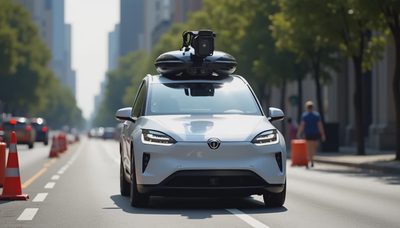
Every quarter, we see another autonomy demo: a self-driving taxi navigating San Francisco or a highway pilot system handling highway miles. But the real question is whether this scales. Waymo and Cruise have expanded geofenced operations, but the economic unit economics remain challenged. The cost of sensor arrays and redundant compute isn't dropping fast enough to make Level 4 autonomy profitable in every city. Meanwhile, Tesla’s pure-vision approach avoids LiDAR cost but faces regulatory and safety hurdles. The automotive technology news cycle tends to celebrate every mile driven autonomously, but the industry needs to watch the cost per mile — that’s the true North Star.
For suppliers, the bet is on production-ready hardware. Mobileye’s EyeQ family and Qualcomm’s Snapdragon Ride are designed to scale across OEMs. But the hardware story and the margin story are not the same story. Automakers are realizing that selling a premium autonomy package today is easier than building a continuously updating software service that customers pay for monthly. The business model is still emerging, and that’s the part of the automotive technology news that doesn’t get enough attention.

Software-Defined Vehicles: The Real Shift
Every automaker now talks about becoming a software company. That’s easier said than done. Ford, GM, and Volkswagen have all invested billions, but the results are mixed. The software-defined vehicle (SDV) concept promises over-the-air updates, new features post-purchase, and a continuous revenue stream. In practice, it requires a complete rearchitecture of the vehicle’s electronic systems — from zonal architectures to centralized compute platforms.
The winners in this space will be those that can deliver frequent, stable updates without breaking core functions. Tesla has shown the way, but legacy OEMs are held back by legacy supply chains and safety certification processes. The automotive technology news often highlights the latest SDV platform announcement, but the challenge is integration. Suppliers like NXP, Infineon, and Renesas are racing to provide the chips that enable this shift, but software maturity lags behind hardware. The transition from a single-purpose ECU per function to a centralized computer is a decade-long project.
Chips & Supply Chain: The Bottleneck That Won’t Go Away
The semiconductor shortage of 2020–2023 exposed the automotive industry’s dependence on a fragile supply chain. While the shortage has eased, the underlying issues remain. Automakers are now investing in direct partnerships with chipmakers and even building their own designs (Tesla, GM, and Rivian are examples). But the automotive technology news that matters is not just about who is fabbing what — it’s about lead times, allocation, and the shift to 5nm and beyond.
Demand for compute power is exploding. An autonomous electric vehicle can have thousands of dollars worth of chips — more than the engine ever cost in an ICE car. This changes the cost structure dramatically. The automotive technology news should focus on how suppliers like Qualcomm and Nvidia are positioning their platforms as must-have, not optional extras. The margin story here: chip content per vehicle is rising, but automakers are pushing suppliers to cut prices. Tensions are high, and the winners will be those who control the software stack that runs on those chips.

Charging & Battery Systems: Infrastructure Growth and Cost Curve
Battery cost has fallen roughly 80% in the past decade, but we are approaching a plateau. The focus in automotive technology news is shifting from cell chemistry to charging infrastructure and battery management. Tesla’s NACS is becoming a de facto standard in North America, with many automakers adopting it. This is positive for consumer confidence but raises questions about grid capacity and charger reliability.
The real challenge is scalability. Level 2 charging at home is fine for many, but for apartment dwellers and road trips, DC fast charging networks need to be denser and more reliable. Companies like Electrify America and ChargePoint are expanding, but uptime remains a problem. The automotive technology news should also cover battery swapping and bidirectional charging, but the business case is not yet proven. The cost curve for battery packs is still declining, but raw material prices (lithium, nickel, cobalt) remain volatile. Solid-state batteries promise improvements, but mass production is still years away.
The Cost Curve: When Does New Tech Become Affordable?
The most important metric for the automotive technology news is the cost curve of new technologies. Autonomy, SDVs, advanced chips, and high-density batteries all need to reach price points that mass-market buyers can accept. Currently, many of these innovations are reserved for premium EVs and top-tier trims. The transition to mid-market requires scale, learning curve efficiencies, and standardization.
Consider the cost of an autonomous sensor suite: a decade ago, it was over $100,000. Now, with companies like Baidu and Mobileye, it can be under $10,000. But that is still too high for a $30,000 car. The industry needs another factor of 3–5 reduction to make Level 4 broadly accessible. Similarly, battery cost must drop below $70/kWh to achieve price parity with ICE cars. The automotive technology news often misses the unit economic perspective — it reports the tech, but not the cost structure. That’s what we focus on here.
What to Watch Next
For readers tracking the automotive technology news, the key themes are scalability, cost, and integration. Who can deliver an autonomy stack that works reliably and costs less than $5,000? Which automaker will master software updates without breaking the car? How will chip supply chain resilience evolve? These are the questions that will separate the disruptors from the disrupted. The next 12 months will be critical as several automakers release next-generation SDV platforms and new charging networks come online. We’ll be watching, skeptical as always, and reporting what actually matters.