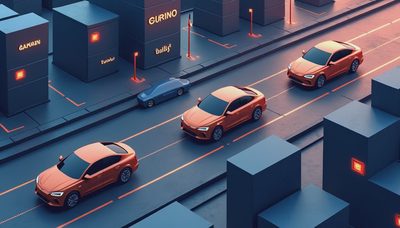
Autonomous vehicle promoters love painting a rosy picture: fewer accidents, more free time, and a revolution in transportation. But anyone following the space closely knows the **cons of self-driving cars** run deeper than most press releases let on. From unresolved safety questions to staggering costs, the technology has real, structural problems that won’t disappear with a few more software updates. Here’s a no-fluff breakdown of the biggest drawbacks.
The list of **cons of self-driving cars** isn’t just about technical glitches—it includes economic, legal, and social friction that could slow adoption for years. Before we talk about when robotaxis go mainstream, let’s talk about why they might not.
Safety Incidents That Undermine Trust
Every high-profile crash involving an autonomous vehicle—whether it’s a Waymo van that hesitates at an intersection or a Tesla on Autopilot that fails to recognize a stationary truck—erodes public confidence. The problem isn’t just that self-driving systems make mistakes; it’s that their failure modes are often unpredictable. Unlike human errors, which are well-studied, AV errors can stem from edge cases that the engineering team never anticipated. The National Transportation Safety Board investigations into several fatal crashes have highlighted systemic issues in sensor fusion and object detection, especially in rain, snow, or glare. Until fleets log hundreds of millions of miles in diverse conditions without serious incidents, the safety argument remains unproven.

Massive Job Displacement Without a Safety Net
The trucking industry alone employs over 3.5 million drivers in the U.S. Taxi, ride-hail, and delivery drivers add millions more. When autonomous trucks and robotaxis scale up, those jobs disappear quickly—and there’s no obvious replacement. Retraining programs are expensive, and many drivers lack the digital skills to shift into AV monitoring or fleet management roles. The **cons of self-driving cars** include a wave of unemployment that could hit rural and low-income communities hardest. Companies like Waymo and Aurora talk about “new jobs” in maintenance and remote operations, but those numbers are a fraction of the ones lost. The social cost is real, and it’s rarely mentioned in tech demos.
The Eye-Watering Cost of Hardware
A production-grade autonomous vehicle still needs lidar (multiple units), high-res radar, cameras, GPS correction modules, and a computing stack that can cost as much as the car itself. Even after years of cost reduction, a full sensor suite for Level 4 autonomy runs roughly $50,000–$100,000 per vehicle when amortized over low volumes. That’s why companies like Cruise and Waymo use purpose-built shuttles or modified EVs that cost far more than a human-driven taxi. The per-mile economics only work if the hardware price drops by an order of magnitude—something silicon and sensor suppliers haven’t yet demonstrated at scale. Until then, robotaxis will remain a subsidized experiment, not a profitable business.
Who Pays When the Algorithm Kills?
Product liability law is built around human actors. When an AV causes a crash, who’s liable? The automaker? The software developer? The sensor supplier? The fleet operator? Current legal frameworks offer no clear answer. Several states have passed AV liability bills, but none have been tested in a major trial. Insurers are still writing policies on a case-by-case basis, often at very high premiums. This legal fog is one of the less-discussed **cons of self-driving cars**: it creates uncertainty that slows investment and deployment. Without a clear liability chain, cities and regulators are hesitant to grant permits, and automakers are nervous about assuming all the risk.
Ethical Dilemmas That Can’t Be Programmed Away
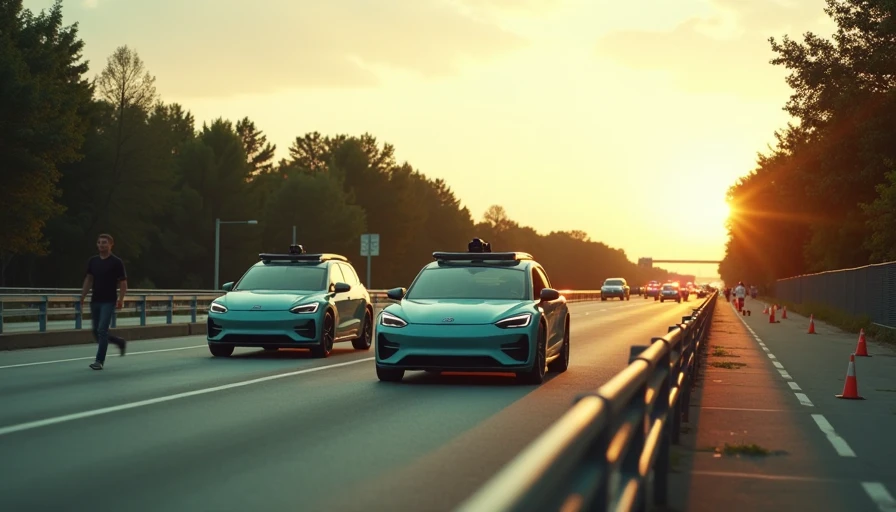
The classic trolley problem is a staple of ethics class, but real AV decision-making is even messier. Should the car swerve to avoid a child, risking the passenger’s life? Should it prioritize the driver or pedestrians? European researchers have shown that public opinion varies wildly by culture, and there’s no universal moral algorithm. Automakers dodge the question by saying their cars will simply brake in any obstacle situation, but that’s not a solution—it’s a hand-wavy cop-out. The machine has to make a choice, and someone will die. That’s a profound **con of self-driving cars** that no software patch can fix.
Infrastructure That Isn’t Ready
Self-driving cars depend on well-marked lanes, functioning traffic lights, and reliable V2X communication—none of which exist in most American cities. Potholes, faded lane markers, construction zones, and unprotected left turns all confuse AV perception stacks. State DOTs are underfunded, and upgrading every mile of road to AV-friendly standards would cost billions. Even simple things like snow-covered lane lines can force a robotaxis into a dead-stop. Until infrastructure catches up, autonomous vehicles will be limited to geofenced areas with perfect conditions—hardly the universal solution vendors promise.
The Simple Joy of Driving Is Lost
Not everything about driving is a chore. Many people enjoy control, responsiveness, and the visceral connection to the road. A self-driving car eliminates that. While that might not trouble commuters stuck in traffic, it alienates enthusiasts and anyone who values the act of driving itself. Automakers like Porsche and BMW have publicly worried that autonomy could kill the sports car segment. Even if AVs become ubiquitous, there will always be a market for manual driving—and that market may feel squeezed by regulations that favor hands-off automation.
Conclusion: The Real Story Is Harder
The **cons of self-driving cars** aren’t a reason to abandon the technology, but they are a reason to temper the hype. Safety, cost, liability, ethics, jobs, and infrastructure are all unresolved at scale. The companies building autonomy have made impressive demos, but the road to mass deployment is far longer and rougher than any roadmap suggests. For investors, policymakers, and tech watchers, understanding these downsides is essential to making realistic bets. The future of mobility will be autonomous eventually—but the journey will be messier than the brochures admit.