The phrase "advanced automotive technologies" gets thrown around a lot at CES and earnings calls, but the real question is whether any of it scales. In 2025, the auto industry is spending billions on autonomy, software-defined vehicles, new chip architectures, and next-gen batteries — but not all progress is equal. For OEMs, suppliers, and investors trying to separate hype from substance, the business consequence behind each technology story matters more than the headlines.
The Autonomy Stack: Scaling vs. Headlines
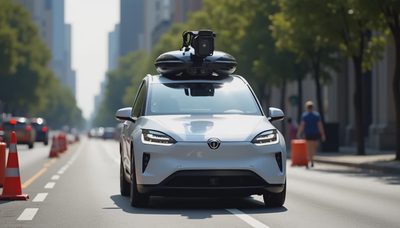
Waymo is now running fully driverless commercial rides in Phoenix, San Francisco, and Los Angeles, and its fleet management data suggests improving cost per mile. Meanwhile, Tesla’s Full Self-Driving (FSD) remains a supervised Level 2 system, and its "solving autonomy with vision only" narrative faces skepticism from engineering teams at traditional automakers who have tried similar approaches. The hardware story and the margin story are not the same story. Waymo’s retrofitted Chrysler Pacificas and Jaguar I-Paces are expensive to build, but the company is now moving toward purpose-built vehicles with Geely’s Zeekr — a platform designed for autonomous operation from the ground up. For suppliers, the real revenue opportunity isn’t in the vehicle itself but in the sensor suite (lidar, radar, cameras) and the compute hardware. Mobileye’s EyeQ chips now power hands-free highway systems for BMW and Volkswagen, but the path to full Level 4 at scale remains years out. The advanced automotive technologies in autonomy are real — but the deployment curve is long, and the winners will be those who solve reliability and cost simultaneously.

Software-Defined Vehicles: The Platform Race
The shift from hardware-defined to software-defined vehicles is arguably the most consequential change in automotive architecture since the assembly line. Carmakers like Rivian have built their own full-stack software platform, while Ford and GM are using Android Automotive for infotainment and over-the-air updates. The business consequence: software can create recurring revenue through subscriptions (e.g., BMW’s heated seat subscription, though that was rescinded after backlash), but it also increases R&D costs enormously. A modern vehicle runs over 100 million lines of code, and managing that software lifecycle is a challenge most OEMs are ill-equipped for — that’s why many are partnering with Google, Amazon (AWS for connected services), or hiring from Silicon Valley. The key metric isn’t just how many vehicles can take an OTA update, but how much value can be unlocked over the vehicle’s lifetime. The advanced automotive technologies enabling this — high-performance central compute platforms from Nvidia (Drive Orin, Thor), Qualcomm (Snapdragon Ride Flex), and NXP — are where the supply chain sees the most growth.
Chip Supply: From Shortage to Strategic Play
The semiconductor shortage of 2021–2023 taught automakers a painful lesson: you can’t build 100,000 vehicles without a $2 chip for a window motor. Today, the industry is rearchitecting its electrical architecture to reduce the number of microcontroller units (MCUs) and consolidate into domain controllers. This is a multiyear shift, but it’s already visible: the GM Ultium platform uses a flexible battery management system controlled by fewer but more powerful chips, and the Volkswagen MEB+ platform simplifies wiring by 20% compared to older VW platforms. The advanced automotive technologies in chips aren’t just about smaller nodes — they’re about safety-certified compute for ASIL-D (Automotive Safety Integrity Level D) systems, and about chips that can handle both real-time control and rich application workloads. Suppliers like STMicroelectronics, Infineon, and NXP are investing heavily in 28nm and 16nm automotive-grade fabs, but the real bottleneck is design complexity and qualification time. Expect the next two years to see more vertical integration, with OEMs like Tesla designing their own chips (Dojo for training, HW4 for inference) and others signaling similar moves.

Battery Tech: Beyond Cell Chemistry
Every battery startup claims to have a breakthrough, but the reality is that lithium-ion — specifically LFP for entry-level and NCM for premium — will dominate through 2030. The advanced automotive technologies that matter in batteries are manufacturing innovations: dry-electrode coating, cell-to-pack integration, and 4680 form factor scaling. Tesla’s 4680 cell, first announced in 2020, has taken years to reach volume production at Giga Texas and Giga Berlin, but output is now climbing. The benefit isn’t just energy density — it’s reducing the cost per kilowatt-hour by simplifying the pack structure. CATL’s Qilin and BYD’s Blade batteries also push structural integration, allowing automakers to save weight and space. For investors, the key metric is not the lab-level energy density but the production yield and capital expenditure per GWh. Solid-state batteries from QuantumScape and Toyota remain years away from commercial vehicles, but they are serious candidates for the late 2020s EV platform upgrades.
The Cost Curve: When Advanced Tech Becomes Profitable
All of these advanced automotive technologies come with a price tag. Lidar modules that cost $75,000 a decade ago are now under $1,000 at volume. Nvidia’s next-generation Thor chip is rumored to cost several hundred dollars per unit, but it eliminates multiple smaller chips. The real question is whether the total vehicle bill of materials plus software development amortization can produce positive unit margins at the vehicle price points consumers will accept. The answer so far is mixed: Tesla’s high margins have come from relentless engineering simplification, while legacy OEMs are struggling to get their EV programs to break even. The advanced automotive technologies that win will be those that offer a clear value proposition — safety improvement, energy efficiency, or a new feature that consumers will pay for, like hands-free highway driving or charge times under 15 minutes. Anything else remains a good demo, but a harder business.
What to watch in 2025: how quickly premium OEMs like Mercedes and BMW can monetize Level 2+ features via recurring software subscriptions; whether GM’s Super Cruise can expand its freeway map coverage fast enough to keep customer satisfaction high; and which Chinese automakers bring their advanced tech — especially in batteries and infotainment — into the US market via partnerships or local production. The noise around advanced automotive technologies is loud, but the signal is in the economics.