Automotive technology is advancing faster than at any point in the last century—but not all of it will survive contact with the real world. The industry is splitting into two camps: those delivering real engineering progress and those offering polished demos that don’t scale. For investors, suppliers, and engineers, the challenge is telling them apart.
This article breaks down the four areas where automotive technology is having the most impact right now: autonomy stacks, in-car software, semiconductors, and battery systems. Each has its own cost curve, hype cycle, and margin story. Let’s separate signal from noise.
1. Autonomy Stack: Where Automotive Technology Meets Reality
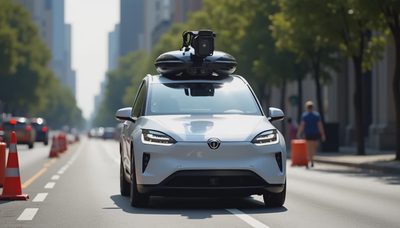
The autonomy stack is the poster child for automotive technology hype, but production deployments are finally catching up. Level 2+ systems—hands-off on highways with driver monitoring—are shipping in volume from Tesla, Mercedes-Benz, and Ford. The real question is whether these systems can scale to Level 4 without a hardware revolution.
Current stacks rely on camera-dominant perception with radar backup. Lidar is still too expensive for widespread consumer adoption, though costs have dropped below $1,000 per unit for some Tier 1 suppliers. The business case remains shaky: automakers spend billions on R&D but struggle to monetize autonomy beyond a subscription. The margin story is that safety features drive hardware sales, while fully autonomous ride-hail remains a capital-intensive gamble.
A more pragmatic view: automotive technology in the autonomy space is converging on sensor fusion and end-to-end neural nets, but validation remains the bottleneck. Simulation miles are cheap; real-world edge cases are not.

2. Software-Defined Vehicles: Automotive Technology's Next Frontier
The shift to software-defined vehicles (SDVs) is the most consequential change in automotive technology since the microprocessor. Instead of dozens of isolated ECUs, modern cars run on centralized compute platforms with over-the-air update capability. GM’s Ultifi platform, VW’s CARIAD, and Tesla’s vertical integration all aim for the same goal: decouple hardware cycles from software cycles.
This architectural shift has deep business consequences. It allows automakers to push revenue-generating features—like enhanced autopilot or heated seats—long after the sale. But it also creates security and reliability risks. A single OTA update can fix a bug or brick a vehicle. The recall cost for software is lower, but the reputational risk is higher.
The hardware story and the margin story are not the same story. SDVs require expensive silicon and wiring harness redesigns, but the per-unit software margin can exceed 50% once the platform is amortized. The winners will be those who manage the transition without alienating customers with glitchy launches.
3. Chips & Supply Chain: The Backbone of Automotive Technology
Semiconductor shortages taught the industry a brutal lesson: automotive technology depends on chips, and the supply chain is fragile. The good news is that investment is pouring into dedicated auto-grade fabs. TSMC’s Kumamoto fab and Intel’s Ohio expansion both allocate significant capacity for automotive nodes. But the shift from 180nm to 7nm for ADAS processors means higher performance and higher cost per wafer.
The real constraint isn’t just capacity—it’s design complexity. Today’s vehicles contain over 1,000 chips, from simple power management ICs to complex SoCs for infotainment and autonomy. The trend is toward consolidation: fewer, more powerful chips that handle multiple functions. Qualcomm’s Snapdragon Ride Flex and NVIDIA’s Thor are examples of domain controllers that merge ADAS and cockpit onto one die.
Automotive technology in the chip space is moving faster than the vehicles themselves. Development cycles for silicon (3–4 years) now match vehicle platforms, forcing closer collaboration between automakers and foundries. The result is more custom silicon—like Tesla’s D1 chip—and less reliance on off-the-shelf parts.

4. Charging & Battery Systems: The Cost Curve of Electrification
Battery technology remains the gating factor for mass EV adoption, and automotive technology is obsessively focused on increasing energy density while reducing cost. Lithium-iron-phosphate (LFP) packs have dropped below $100/kWh at the pack level, and solid-state prototypes promise 50% higher density by 2030. But scaling solid-state manufacturing is a multi-billion-dollar engineering challenge.
Charging infrastructure is another battlefield. The adoption of NACS by Ford, GM, and others signals a standardization win for owners, but installation rates still lag behind EV sales. The real bottleneck is grid capacity, not connector plugs. Automotive technology in charging is moving toward 800V architectures that can add 200 miles of range in 15 minutes, but only if the charging station can deliver 350 kW.
The margin story here is that battery production is becoming a competitive advantage. Vertical integrators like Tesla and BYD can control cost and chemistry, while traditional automakers scramble to sign long-term deals with suppliers. The winners will be those who lock in cell supply at predictable prices.
5. The Cost Curve: When Automotive Technology Hurts Profits
Every technology trend above comes with a trade-off: higher performance, higher feature count—but higher cost per vehicle. The average new car now carries over $4,000 worth of electronics, and that figure is rising. For mass-market brands, passing those costs to consumers is increasingly difficult as interest rates and loan delinquencies climb.
Automotive technology must eventually pay for itself. That means either reducing cost through integration and scale, or generating recurring revenue through subscriptions. The most promising path is the combination: a centralized compute platform that can serve multiple vehicle segments, upgraded via software to keep fleets revenue-active for years.
Good demo, harder business. The industry is full of impressive technology demos that never make it to production at a viable margin. The automotive technology that survives will be the kind that delivers measurable improvements in cost, safety, or efficiency—not just a flashy press release.
The Bottom Line on Automotive Technology
The automotive technology landscape is dynamic, but the fundamentals haven’t changed. Hardware scales, software differentiates, and the companies that master both will lead the next decade. Separating the real engineering from the hype requires asking one question: Does this technology solve a real operational bottleneck or just create a new one?
If you're an investor or engineer, focus on companies with clear roadmaps to cost reduction and revenue generation. If you're a buyer, recognize that automotive technology adds value only when it works reliably every day. The future is coming—but it’s arriving on a cost curve, not a promise.