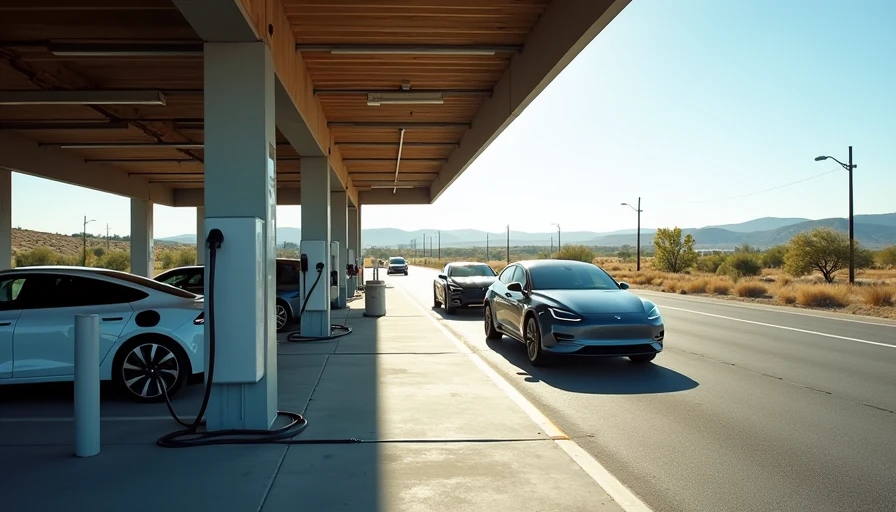
What U.S. Charging Networks Need to Fix Before EV Adoption Hits the Next Level
Public charging infrastructure in the United States continues to grow in station count, yet many drivers still report inconsistent experiences that limit confidence in long-distance EV travel. While new chargers are being added rapidly, the industry must solve several foundational operational problems before charging networks can support significantly higher EV adoption.
The Gap Between Expansion and Usability
Announcements about thousands of new charging stalls often dominate headlines. However, real-world usability frequently lags. Drivers commonly encounter offline stations, slow or throttled charging speeds, payment failures, and poor physical station conditions. These issues create friction that discourages potential EV buyers who lack reliable home charging.
Reliability remains the weakest link. A charger that is frequently out of service or delivers far below advertised power does more harm than good to consumer perception.
Priority Issues Charging Networks Must Address
1. Uptime and Maintenance
Networks need dramatically better station monitoring and faster repair times. A broken charger at a key location can disrupt travel plans and erode trust.
2. Consistent Power Delivery
Many stations advertise high kW ratings but frequently deliver lower speeds due to grid constraints, poor thermal management, or cabling limitations. Consistent, predictable charging curves are more valuable than peak numbers on paper.
3. Seamless User Experience
Payment systems, app reliability, and plug-and-charge functionality still vary widely between networks. Drivers should be able to arrive, plug in, and charge without multiple apps or authentication failures.
4. Site Quality and Location Strategy
Many stations suffer from poor lighting, inadequate parking design, or inconvenient placement. As EV numbers grow, competition for good highway and urban locations will intensify.
5. Grid Integration Readiness
Future growth requires better coordination with utilities to handle peak demand and avoid costly demand charges that hurt operator economics.
Competitive Advantage in Reliability
Operators and automakers who solve these issues first will gain meaningful differentiation. Features like effective battery preconditioning only deliver their full value when paired with reliable, high-power chargers. Networks with superior uptime and consistency will see higher utilization rates and stronger customer loyalty.
The transition to NACS helps simplify the physical connection, but it does not automatically fix backend reliability or operational execution.
Implications for EV Adoption
For mainstream EV adoption — particularly among buyers without home charging — public infrastructure must feel convenient and dependable. Persistent reliability problems keep EVs in a “range anxiety plus charging anxiety” trap for many potential customers.
Automakers pushing higher EV volumes have a vested interest in demanding better performance from charging partners. Some are already investing directly in networks or forming deeper partnerships to improve outcomes.
What to Watch
Industry participants should track:
Independent uptime and session success metrics
Improvements in average delivered charging speeds
Progress on standardized, reliable plug-and-charge experiences
How new stations perform compared to legacy installations
These operational metrics matter more than total stall counts for the next phase of growth.
The Practical Question
U.S. charging networks have made impressive progress on expansion. The harder and more important phase is shifting from “more chargers” to “reliable, high-quality chargers.” Operators that prioritize uptime, consistency, and user experience will be best positioned as EV adoption moves beyond early enthusiasts.
Until these fundamentals improve significantly, charging infrastructure will remain one of the biggest constraints on faster EV market growth.
Auto Stack Report will continue monitoring charging networks with focus on real-world performance rather than deployment targets alone.